Zurück zu den Vorlagen
Krabbe Steinmalerei
Benötigte Materialien
- Glatter, flacher Stein (handgroß)
- Rote Acrylfarbe
- Orange Acrylfarbe
- Schwarze Acrylfarbe
- Weiße Acrylfarbe
- Flacher Pinsel (mittelgroß)
- Feiner Detailpinsel
- Klarlackspray
Schritt-für-Schritt-Anleitung
1
Schritt 1: Paint a sandy ocean background
Wash and dry your flat rock. Paint the entire surface with sandy yellow or beige paint. Add a thin strip of light blue at the top of the rock for the sea. This background sets the beach scene before the crab is painted on top.
2
Schritt 2: Sketch and paint the crab body
Sketch an oval or rounded trapezoid shape for the crab body in the center of the rock. Paint it bright red or orange. Add a slightly darker shade on the edges to suggest the dome-shaped carapace (shell). Two small eyes on stalks can be suggested as tiny bumps at the front.
3
Schritt 3: Paint the claws
Paint two large claws (chelae) extending from the front of the body. Each claw has a wider upper arm and a pincer at the end - paint a thick curved arm with two pointed finger shapes at the tip. Make the claws proportionally large - they should look powerful.
4
Schritt 4: Add the legs
Paint four thin walking legs on each side of the body (eight legs total). They should be jointed - paint them as two segments that bend at an angle. Crabs walk sideways, so position the legs extending to the sides and slightly forward.
5
Schritt 5: Add details and seal
Paint two small white eyes on tiny stalks at the front of the body. Add curved lines on the carapace with dark red to suggest texture. Add white highlights on the top of the claws for a shiny shell effect. Once dry, apply clear sealant.
Schritt 6: RoxGeo-Code hinzufügen
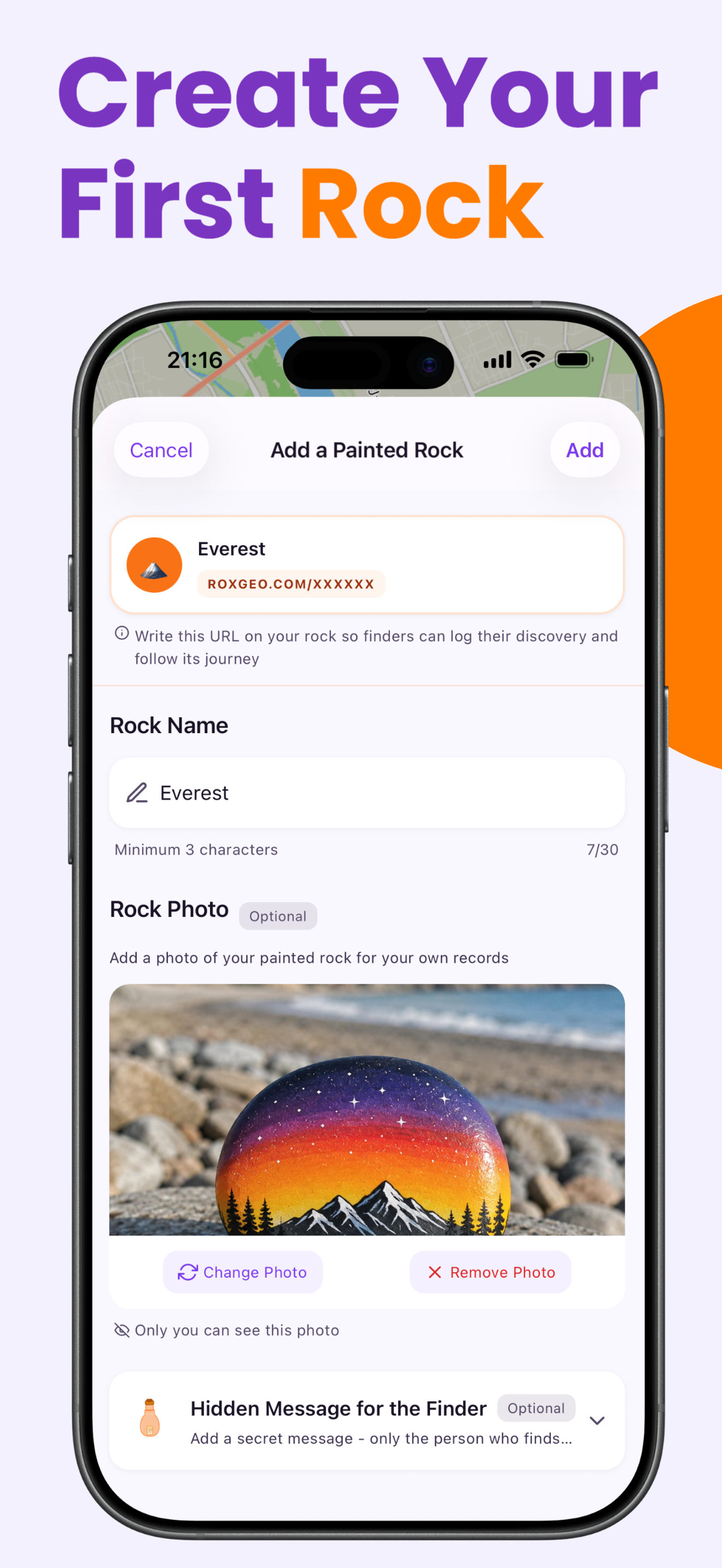
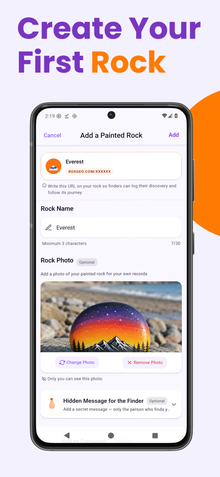
Schreibe auf die Unterseite oder Rückseite deines Steins ROXGEO.COM gefolgt von einem Schrägstrich und dem einzigartigen Code deines Steins (z.B. ROXGEO.COM/ABC123). So kann der Finder direkt zur Profilseite deines Steins gelangen und seinen Fund protokollieren. Wenn der Stein zu klein für die vollständige Adresse ist, schreibe #ROX gefolgt vom Code ohne Leerzeichen (z.B. #ROXABC123) – das ist kurz, leicht bei Google zu suchen und führt direkt zur Reiseseite deines Steins. Verwende einen feinen wasserfesten Stift oder Acryl-Farbstift und versiegle ihn mit Klarlack, damit der Code durch Regen, Sonne und Abenteuer lesbar bleibt.
Hilfreiche Tipps
- Wähle eine Steinform, die zu deinem Motiv passt.
- Zeichne das Motiv mit Bleistift vor, bevor du anfängst zu malen.
- Lass jede Schicht vollständig trocknen, bevor du die nächste aufträgst.
- Versiegle mit Klarlackspray, damit dein Stein auch draußen schön bleibt.
- Für den RoxGeo-Code auf der Unterseite verwende einen wasserfesten Permanentmarker (wie Sharpie) oder einen Acryl-Farbstift. Trage 2–3 Schichten klare Versiegelung über dem Code auf – das hält ihn monatelang durch Regen, Sonne und Anfassen lesbar.
- #ROXCODE (z.B. #ROXABC123) auf deinen Stein zu schreiben macht es einfach, ihn über Google zu finden. Wir optimieren aktiv für diesen Hashtag, sodass jeder, der danach sucht, die Profilseite deines Steins schnell findet.
- Die vollständige Adresse ROXGEO.COM/CODE bringt den Finder direkt zur Karte deines Steins, wo er die vollständige Reisehistorie, vorherige Finder und Fotos von jeder Station seiner Reise sehen kann.
Male diesen Stein und verfolge seine Reise mit RoxGeo!
RoxGeo kostenlos herunterladen