Atgal į šablonus
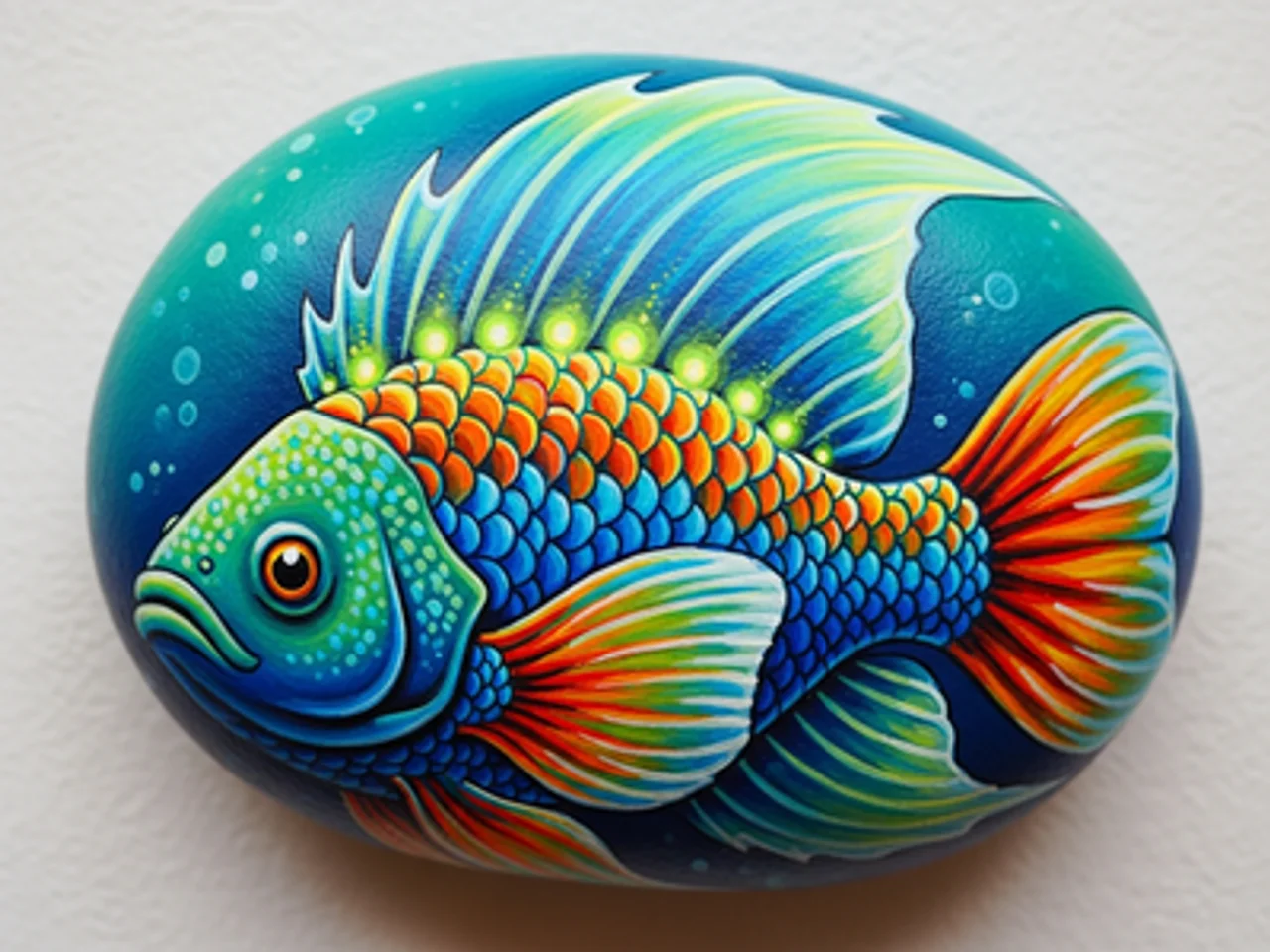
Giluminės Jūros Žuvis Akmens Tapyba
Reikalingos medžiagos
- Lygus, pailgas plokščias akmuo
- Juoda akrilinė dažai
- Tamsiai mėlyna akrilinė dažai
- Balta akrilinė dažai
- Geltona akrilinė dažai
- Mėlyna akrilinė dažai
- Plokščias teptukas (vidutinis)
- Smulkus detalių teptukas
- Skaidrus lakas purkštuvoje
Žingsnis po žingsnio instrukcijos
1
Žingsnis 1: Paint the pitch-dark abyss
Wash and dry your rock. Paint the entire surface with near-black. While still wet, blend in deep navy blue in the upper areas to suggest the water column — darker at the bottom (deepest water) and slightly less dark higher up. The abyssal zone has no sunlight at all. Add a few scattered pinpoints of light for bioluminescent particles in the water column.
2
Žingsnis 2: Sketch and paint the angler fish body
Sketch an anglerfish (deep sea fish) body — a wide, rounded head taking up most of the body, with a tapering tail. The anglerfish is the most recognizable deep sea creature. Paint the body in deep teal or dark gray-blue. Add a large, gaping mouth with massive jagged teeth in white — the teeth are a hallmark feature.
3
Žingsnis 3: Paint the bioluminescent lure
On the top of the anglerfish's head, paint a long spine (illicium) extending forward and curving down in front of the mouth. At the tip, paint a small glowing bulb in bright cyan or neon blue-green with a white core. This is the esca — the bioluminescent lure the anglerfish uses to attract prey in the darkness.
4
Žingsnis 4: Add bioluminescent body markings
Using neon green or bright cyan paint and a fine brush, add a series of glowing spots and curving line patterns along the body and fins of the anglerfish. These bioluminescent patterns suggest the photophores (light-producing organs) that many deep sea creatures use for communication and camouflage.
5
Žingsnis 5: Add the glowing eye and seal
Paint a large, haunting deep-sea eye on the side of the anglerfish head — a wide greenish iris surrounding a large black pupil with a tiny white highlight. Add a glow halo around the entire fish using very diluted cyan paint. Apply gloss sealant. The wet, shiny finish makes the fish look submerged in water.
Žingsnis 6: Pridėti RoxGeo kodą
Akmens apačioje arba gale parašykite ROXGEO.COM, po kurio pasvirąjį brūkšnį ir unikalų uolos kodą (pvz., ROXGEO.COM/ABC123). Tai leidžia ieškikliui patekti tiesiai į jūsų roko profilio puslapį ir užregistruoti atradimą. Jei uoliena per maža visam adresui, parašykite #ROX ir kodą be tarpų (pvz., #ROXABC123) – tai trumpa, paprasta ieškoti „Google“ ir nukreipia tiesiai į jūsų akmens kelionės puslapį. Naudokite smulkių galiukų nuolatinį žymeklį arba akrilo dažų rašiklį ir užklijuokite jį skaidriu laku, kad kodas liktų įskaitomas per lietų, saulę ir nuotykius.
Naudingi patarimai
- Pasirink akmens formą, atitinkančią tavo motyvą.
- Pieštuku eskizuok motyvą prieš tapymą.
- Prieš dedant kitą sluoksnį, leiskite kiekvienam sluoksniui visiškai išdžiūti.
- Užantspauduok skaidriu laku, kad akmuo atlaikytų ir lauke.
- RoxGeo kodui apačioje naudokite vandeniui atsparų nuolatinį žymeklį (pvz., Sharpie) arba akrilo dažų rašiklį. Ant kodo užtepkite 2–3 skaidraus sandariklio sluoksnius – taip jis bus skaitomas per lietų, saulę ir naudojant kelis mėnesius.
- Ant uolos užrašius #ROXCODE (pvz., #ROXABC123), jį lengva rasti naudojant „Google“ paiešką. Mes aktyviai optimizuojame šią žymą su grotelėmis, todėl visi jos ieškantys greitai suras jūsų roko profilio puslapį.
- Visas adresas ROXGEO.COM/CODE nukreipia ieškiklį tiesiai į jūsų uolos kortelę, kur jis gali matyti visą kelionės istoriją, ankstesnius ieškiklius ir nuotraukas iš kiekvienos kelionės stotelės.
Nupieškite šią uolą ir stebėkite jos kelionę naudodami RoxGeo!
Parsisiųsti roxgeo nemokamai