Atpakaļ uz veidnēm
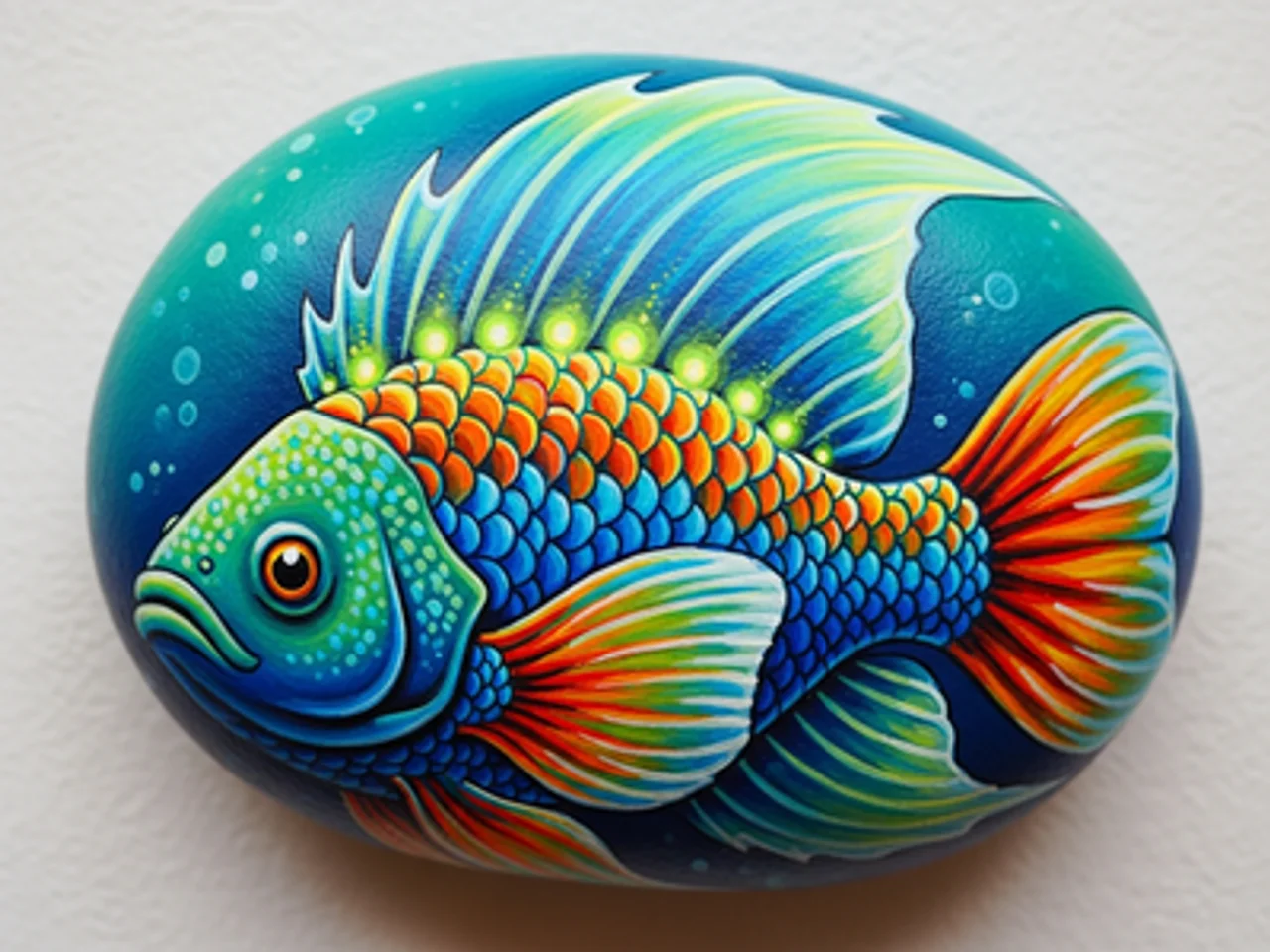
Dziļūdens Zivs Akmens Gleznošana
Nepieciešamie materiāli
- Gluda, iegarena plakana akmens
- Melna akrila krāsa
- Tumša zila akrila krāsa
- Balta akrila krāsa
- Dzeltena akrila krāsa
- Zila akrila krāsa
- Plakans ota (vidēja)
- Smalka detaļu ota
- Caurspīdīgs laka aerosols
Soli pa solim instrukcijas
1
Solis 1: Paint the pitch-dark abyss
Wash and dry your rock. Paint the entire surface with near-black. While still wet, blend in deep navy blue in the upper areas to suggest the water column — darker at the bottom (deepest water) and slightly less dark higher up. The abyssal zone has no sunlight at all. Add a few scattered pinpoints of light for bioluminescent particles in the water column.
2
Solis 2: Sketch and paint the angler fish body
Sketch an anglerfish (deep sea fish) body — a wide, rounded head taking up most of the body, with a tapering tail. The anglerfish is the most recognizable deep sea creature. Paint the body in deep teal or dark gray-blue. Add a large, gaping mouth with massive jagged teeth in white — the teeth are a hallmark feature.
3
Solis 3: Paint the bioluminescent lure
On the top of the anglerfish's head, paint a long spine (illicium) extending forward and curving down in front of the mouth. At the tip, paint a small glowing bulb in bright cyan or neon blue-green with a white core. This is the esca — the bioluminescent lure the anglerfish uses to attract prey in the darkness.
4
Solis 4: Add bioluminescent body markings
Using neon green or bright cyan paint and a fine brush, add a series of glowing spots and curving line patterns along the body and fins of the anglerfish. These bioluminescent patterns suggest the photophores (light-producing organs) that many deep sea creatures use for communication and camouflage.
5
Solis 5: Add the glowing eye and seal
Paint a large, haunting deep-sea eye on the side of the anglerfish head — a wide greenish iris surrounding a large black pupil with a tiny white highlight. Add a glow halo around the entire fish using very diluted cyan paint. Apply gloss sealant. The wet, shiny finish makes the fish look submerged in water.
Solis 6: Pievienojiet RoxGeo kodu
Akmens apakšā vai aizmugurē ierakstiet ROXGEO.COM, kam seko slīpsvītra un akmens unikālais kods (piemēram, ROXGEO.COM/ABC123). Tas ļauj meklētājam doties tieši uz jūsu klints profila lapu un reģistrēt savu atklājumu. Ja klints ir pārāk maza pilnai adresei, ierakstiet #ROX, kam seko kodu bez atstarpēm (piem., #ROXABC123) — tas ir īss, viegli meklējams Google tīklā un novirza tieši uz jūsu klints ceļojuma lapu. Izmantojiet marķieri ar smalku galu vai akrila krāsas pildspalvu un nolīmējiet to ar caurspīdīgu laku, lai kods paliktu salasāms lietū, saulē un piedzīvojumos.
Noderīgi padomi
- Izvēlies akmens formu, kas atbilst tavam motīvam.
- Iezīmē motīvu ar zīmuli pirms gleznošanas.
- Ļaujiet katram slānim pilnībā nožūt pirms nākamā uzklāšanas.
- Aizveriet ar caurspīdīgu laku, lai akmens saglabātu izskatu arī ārā.
- RoxGeo kodam apakšā izmantojiet ūdensizturīgu pastāvīgo marķieri (piemēram, Sharpie) vai akrila krāsas pildspalvu. Uzklājiet 2–3 caurspīdīga hermētiķa kārtas virs koda — tas saglabās to salasāmu lietū, saulē un vairākus mēnešus.
- Uzrakstot uz klints #ROXCODE (piem., #ROXABC123), to ir viegli atrast, izmantojot Google meklēšanu. Mēs aktīvi optimizējam šo tēmturi, tāpēc ikviens, kas to meklē, ātri atradīs jūsu roka profila lapu.
- Pilna adrese ROXGEO.COM/CODE meklētāju novirza tieši uz jūsu klints karti, kur var skatīt visu tās ceļojumu vēsturi, iepriekšējos atradējus un fotoattēlus no katras pieturas savā ceļojumā.
Krāsojiet šo akmeni un izsekojiet tā ceļojumam ar RoxGeo!
Lejupielādējiet RoxGeo bez maksas