Zurück zu den Vorlagen
Keltischer Knoten Steinmalerei
Benötigte Materialien
- Glatter, flacher Stein (handgroß)
- Grüne Acrylfarbe
- Schwarze Acrylfarbe
- Weiße Acrylfarbe
- Feiner Detailpinsel
- Flacher Pinsel (mittelgroß)
- Klarlackspray
- Bleistift
Schritt-für-Schritt-Anleitung
1
Schritt 1: Paint the dark background and plan the design
Wash and dry your rock. Paint the entire surface black or very dark green. Let dry. Print a Celtic knot reference image (a simple triquetra or interlace knot). Transfer the design by sketching it with pencil directly on the dark painted rock. Take your time - Celtic knots require precise planning.
2
Schritt 2: Paint the knot ribbon strands
Using forest green paint and your fine brush, carefully paint the ribbon strands of the Celtic knot following your pencil lines. Celtic knots consist of continuous interlacing ribbons that loop over and under each other. Keep each ribbon about the same width throughout.
3
Schritt 3: Create the over-under weaving effect
The most important part of a Celtic knot is showing which strand passes over and which passes under. At each crossing point, one strand is continuous and one is interrupted. Paint the "over" strand as a solid line, and leave a small gap in the "under" strand where they cross. Use slightly darker green in the gap areas.
4
Schritt 4: Add highlights and shading to the ribbons
Using light green paint, add a highlight line along the center or upper edge of each ribbon strand. This shading suggests that the ribbons are three-dimensional bands, not flat lines. Use darker green for the shaded edges. Gold outlines along the ribbon edges add richness.
5
Schritt 5: Add gold outlines and seal
Using gold paint and your finest brush, carefully outline the outer edges of all ribbon strands. This gold border makes the Celtic knot look like illuminated manuscript artwork. Apply clear sealant to protect your intricate Celtic design.
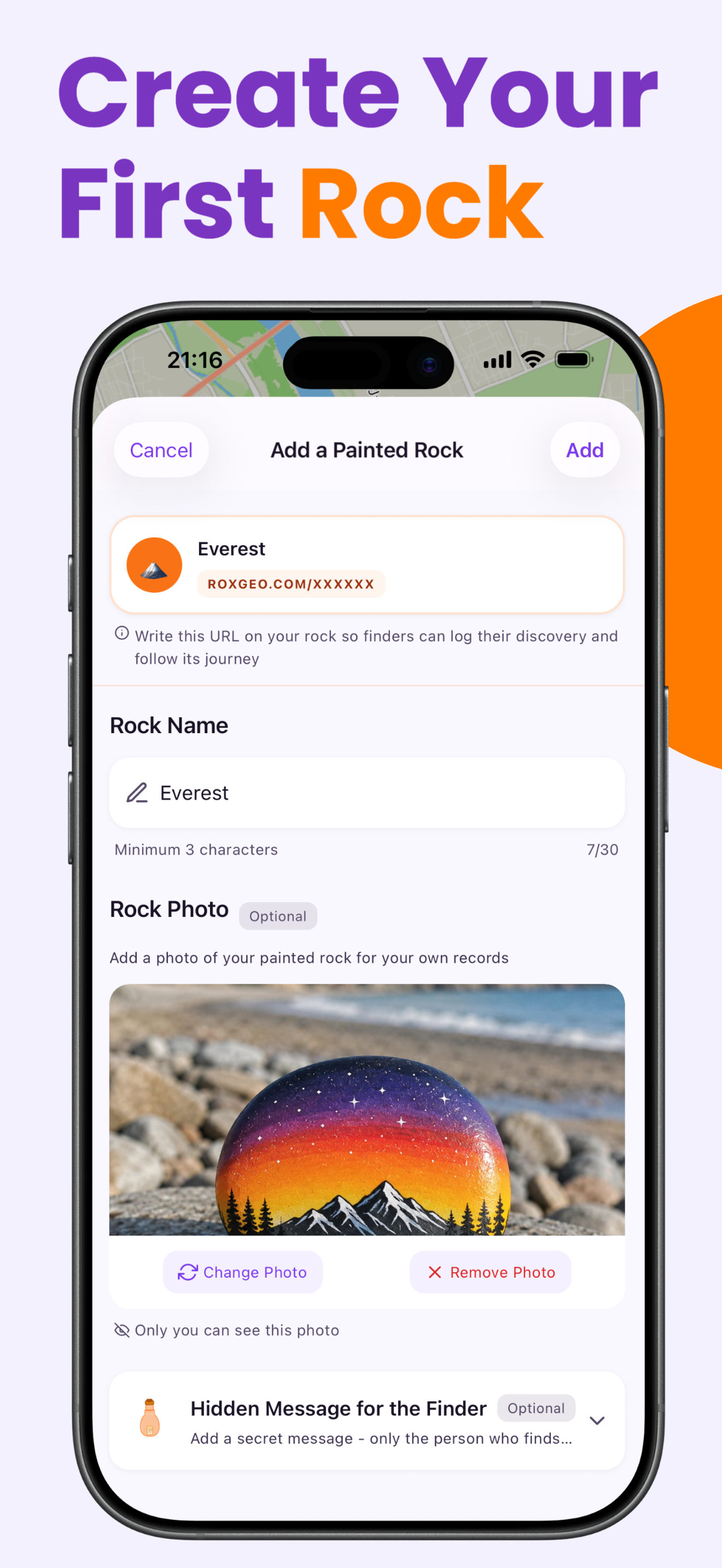
Schritt 6: RoxGeo-Code hinzufügen
Schreibe auf die Unterseite oder Rückseite deines Steins ROXGEO.COM gefolgt von einem Schrägstrich und dem einzigartigen Code deines Steins (z.B. ROXGEO.COM/ABC123). So kann der Finder direkt zur Profilseite deines Steins gelangen und seinen Fund protokollieren. Wenn der Stein zu klein für die vollständige Adresse ist, schreibe #ROX gefolgt vom Code ohne Leerzeichen (z.B. #ROXABC123) – das ist kurz, leicht bei Google zu suchen und führt direkt zur Reiseseite deines Steins. Verwende einen feinen wasserfesten Stift oder Acryl-Farbstift und versiegle ihn mit Klarlack, damit der Code durch Regen, Sonne und Abenteuer lesbar bleibt.
Hilfreiche Tipps
- Zeichne das Motiv mit Bleistift vor, bevor du anfängst zu malen.
- Lass jede Schicht vollständig trocknen, bevor du die nächste aufträgst.
- Wähle eine Steinform, die zu deinem Motiv passt.
- Versiegle mit Klarlackspray, damit dein Stein auch draußen schön bleibt.
- Für den RoxGeo-Code auf der Unterseite verwende einen wasserfesten Permanentmarker (wie Sharpie) oder einen Acryl-Farbstift. Trage 2–3 Schichten klare Versiegelung über dem Code auf – das hält ihn monatelang durch Regen, Sonne und Anfassen lesbar.
- #ROXCODE (z.B. #ROXABC123) auf deinen Stein zu schreiben macht es einfach, ihn über Google zu finden. Wir optimieren aktiv für diesen Hashtag, sodass jeder, der danach sucht, die Profilseite deines Steins schnell findet.
- Die vollständige Adresse ROXGEO.COM/CODE bringt den Finder direkt zur Karte deines Steins, wo er die vollständige Reisehistorie, vorherige Finder und Fotos von jeder Station seiner Reise sehen kann.
Male diesen Stein und verfolge seine Reise mit RoxGeo!
RoxGeo kostenlos herunterladen