Volver a plantillas
Pintura de Ciervo en Piedra
Materiales necesarios
- Piedra alargada y plana
- Pintura acrílica marrón
- Pintura acrílica blanca
- Pintura acrílica negra
- Pincel plano mediano
- Pincel fino de detalle
- Spray sellador transparente
- Lápiz
Guía paso a paso
1
Paso 1: Sketch the deer silhouette
Wash and dry your rock. Using a pencil, lightly sketch the deer as a full face portrait or a side profile depending on your rock shape. For a face portrait, draw a wide oval head, large ears on each side, and branching antlers at the top. Mark a smaller oval for the white muzzle area.
2
Paso 2: Paint the base coat
Paint the entire head and ears with warm brown paint. Apply two coats for an even base. Fill the muzzle oval with a lighter tan or cream color. Let each section dry before moving to the next. The contrast between the brown and cream creates the natural deer coloring.
3
Paso 3: Paint the antlers
Using dark brown paint and your fine brush, paint two branching antlers rising from the top of the head. Start with the main beam going up and slightly outward, then add two to three tines branching from each beam. Keep the lines thin and organic-looking, wider at the base and tapering to points.
4
Paso 4: Add the face details
Paint two large dark brown eyes with small white highlight dots. Add a small oval black nose at the tip of the muzzle. Draw a subtle mouth line. Add darker shading inside the ears and along the jaw for dimension. Use a slightly darker brown for the sides of the face to create depth.
5
Paso 5: Add spots and seal
For a fawn look, use white paint and a toothpick to add small scattered spots along the back and sides of the neck. These white spots are typical of young deer. Once everything is fully dry, apply clear sealant to protect your nature-inspired rock.
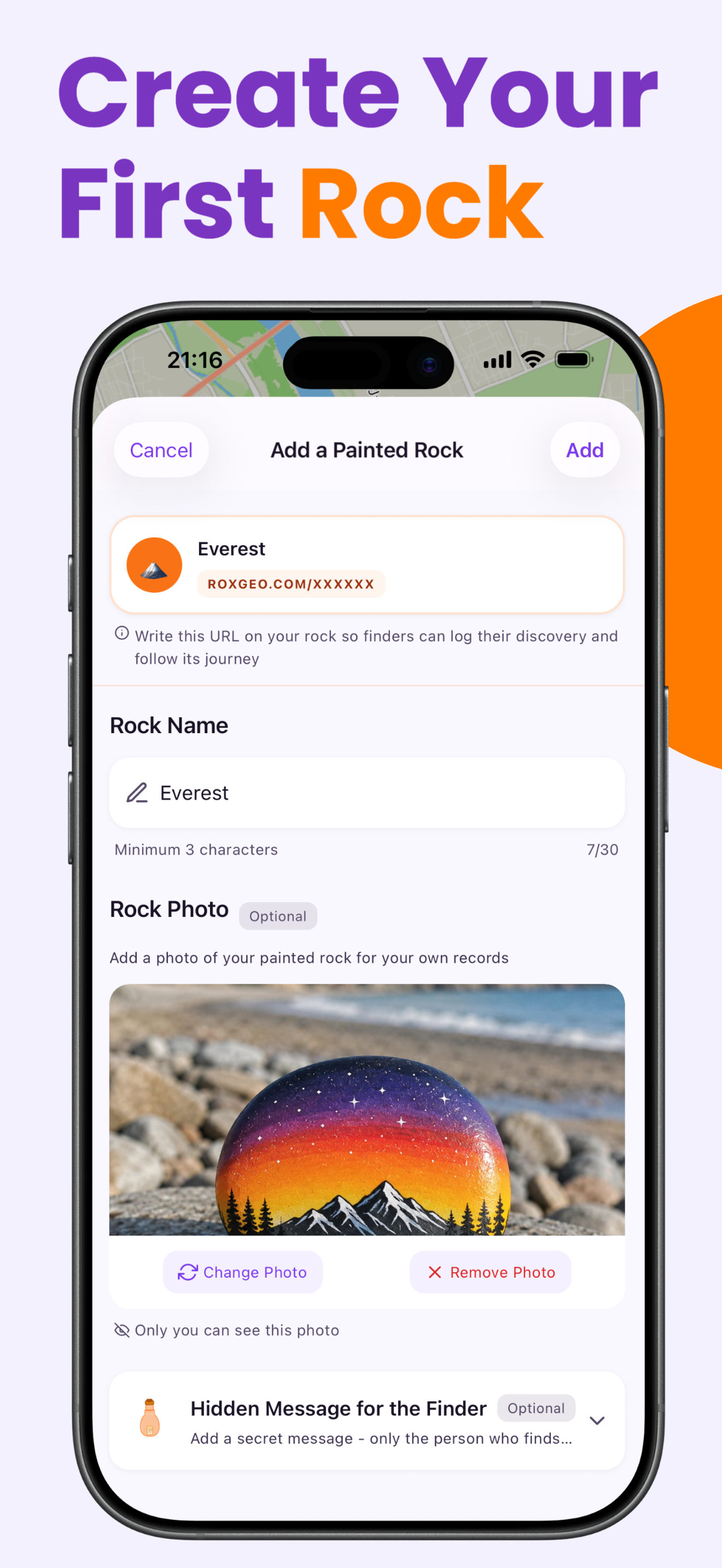
Paso 6: Agregar código RoxGeo
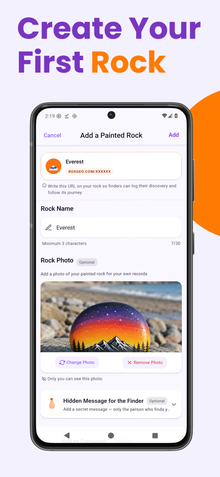
Escribe ROXGEO.COM seguido de una barra y el código único de tu piedra (ej. ROXGEO.COM/ABC123) en la parte inferior o trasera de tu piedra.
Consejos útiles
- Elige una forma de piedra que se ajuste a tu diseño.
- Esboza el diseño a lápiz antes de empezar a pintar.
- Deja secar completamente cada capa antes de añadir la siguiente.
- Sella con spray transparente para proteger tu piedra en exteriores.
- Para el código RoxGeo en la parte trasera, usa un marcador permanente resistente al agua. Aplica 2-3 capas de barniz transparente encima.
- Escribir #ROXCODE (ej. #ROXABC123) en tu piedra lo hace fácil de encontrar en Google.
- La dirección completa ROXGEO.COM/CODE lleva al descubridor directamente al mapa de tu piedra.
¡Pinta esta piedra y rastrea su viaje con RoxGeo!
Descargar RoxGeo gratis