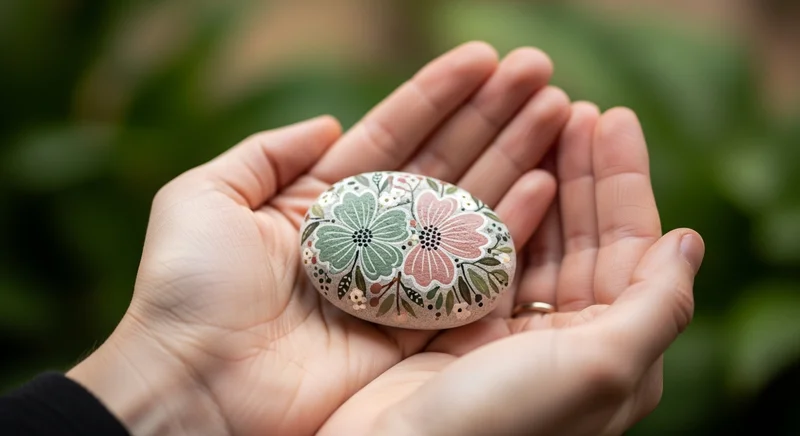
Rock Painting for Seniors: Tips & Adaptations
Rock painting is an ideal activity for older adults because it requires no prior artistic experience, uses inexpensive materials, and can be adapted to virtually any physical limitation. Here are practical tips for making rock painting accessible and enjoyable for seniors:
- Choose larger, flat rocks that are easier to hold and provide more painting surface. River stones with smooth surfaces work best.
- Use thicker-handled brushes or wrap foam grips around standard brushes to accommodate arthritis or reduced grip strength.
- Place non-slip mats under rocks while painting to prevent them from sliding. A damp cloth works well too.
- Start with simple designs — dots, hearts, smiley faces, or single-color washes. Complex patterns are optional, not required.
- Set up well-lit workspaces with comfortable seating. Provide magnifying glasses for those with vision challenges.
What Research Says About Art Therapy
Multiple peer-reviewed studies support the therapeutic value of art activities like rock painting. A 2016 study published in the Journal of the American Art Therapy Association found that just 45 minutes of creative activity significantly reduces cortisol (stress hormone) levels, regardless of artistic skill or experience. Research from the Gerontological Society of America shows that seniors who engage in regular creative activities report better physical health, fewer doctor visits, less medication use, and fewer falls. Art therapy has also been shown to reduce symptoms of depression and anxiety in elderly populations, improve self-esteem and sense of purpose, enhance social engagement in care facilities, and support rehabilitation outcomes for stroke patients.
Adaptations for Limited Mobility
- For wheelchair users, set up tabletop painting stations at comfortable heights with all supplies within easy reach.
- For those with tremors, use dot-painting tools (cotton swabs, pencil erasers) instead of fine brushes for beautiful dotted mandala designs.
- For vision impairment, choose high-contrast color combinations and consider tactile designs using textured paints or 3D fabric paint.
- For bed-bound individuals, provide lap trays and pre-primed white rocks so they can paint with minimal setup.
Building Community Through Rocks
One of the most powerful aspects of rock painting therapy is the community it builds. When seniors paint rocks and hide them using RoxGeo, they become part of a global community of kindness. Receiving notifications when someone finds their rock creates moments of genuine joy and connection — a reminder that their creativity matters and reaches beyond their immediate surroundings. Many care facilities, senior centers, and rehabilitation clinics have adopted rock painting programs. Group sessions provide structured social interaction, while the tracking aspect gives participants an ongoing sense of purpose and anticipation.


