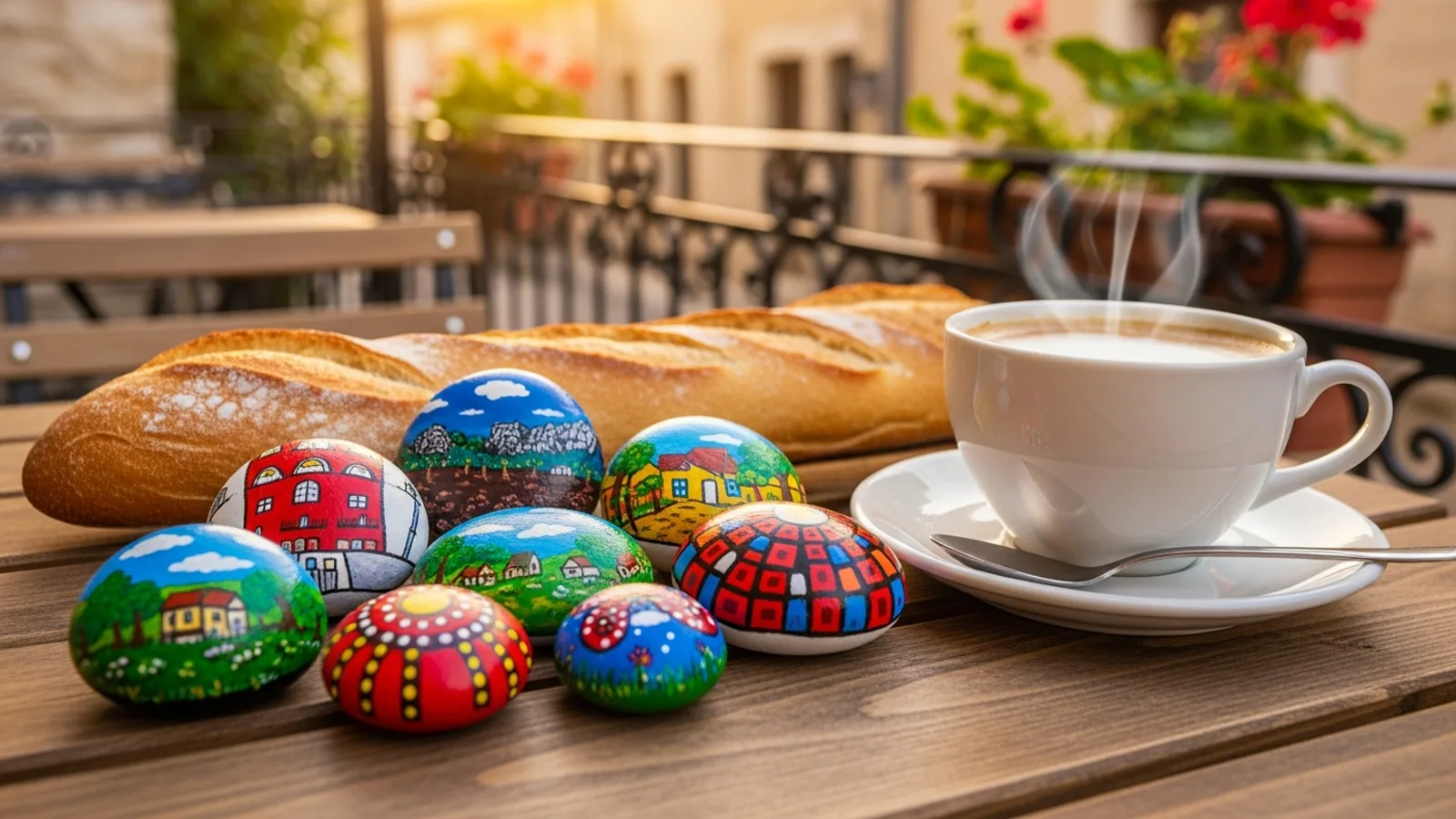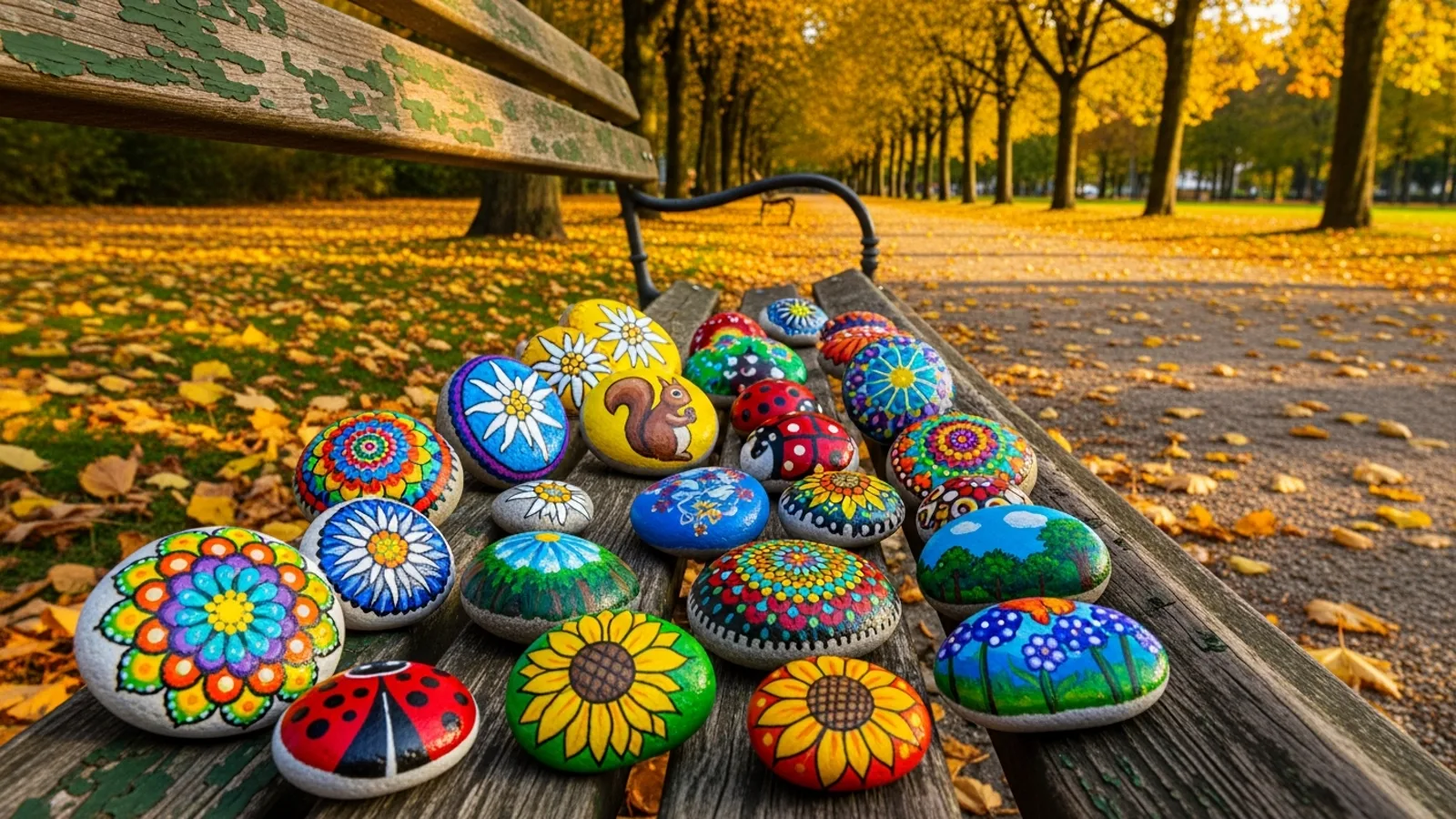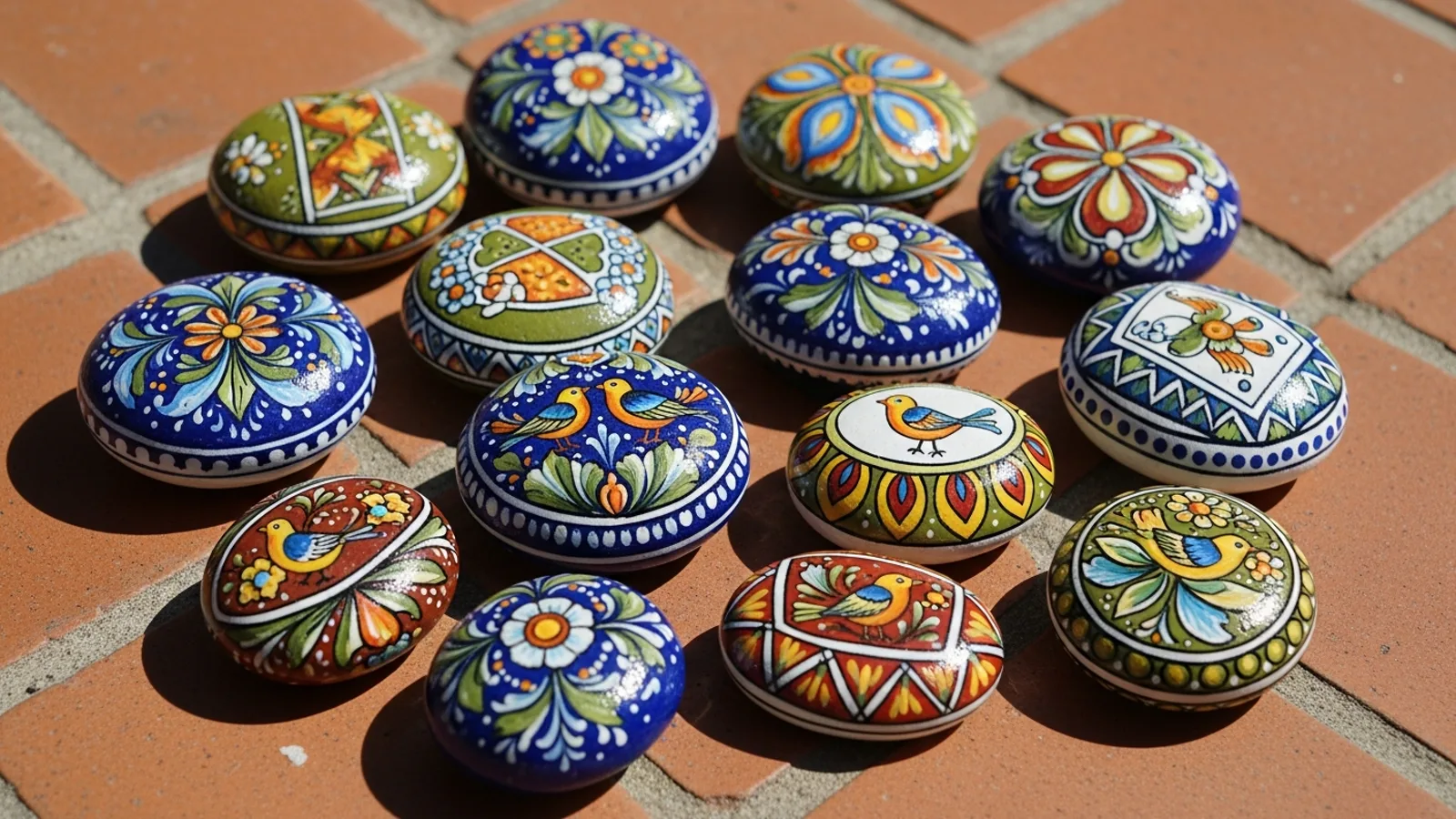
Italy's painted rock community — known as sassi dipinti (painted stones) or pietre dipinte — reflects the country's extraordinary artistic heritage. From the colourful ceramics of Sicily and Calabria to the Renaissance-inspired detail work of Tuscany, Italian rock painters bring a unique Mediterranean vibrancy to the hobby. This guide introduces the Italian community, its traditions, and how to connect with it.
The Italian Sassi Dipinti Community
Italy's painted rock movement grew rapidly from 2016 onwards, driven primarily by Facebook groups and Instagram. Regional groups — "Sassi Dipinti Roma," "Pietre Dipinte Milano," "Sassi Decorati Sicilia" — bring together thousands of passionate artists across all twenty Italian regions. The Italian community stands out for its willingness to incorporate traditional decorative arts — Deruta ceramics, Sicilian folk art, Florentine paper marbling — into stone painting. Register your Italian sassi with RoxGeo to connect local creativity with a global tracking platform.
Italian Design Traditions in Rock Art
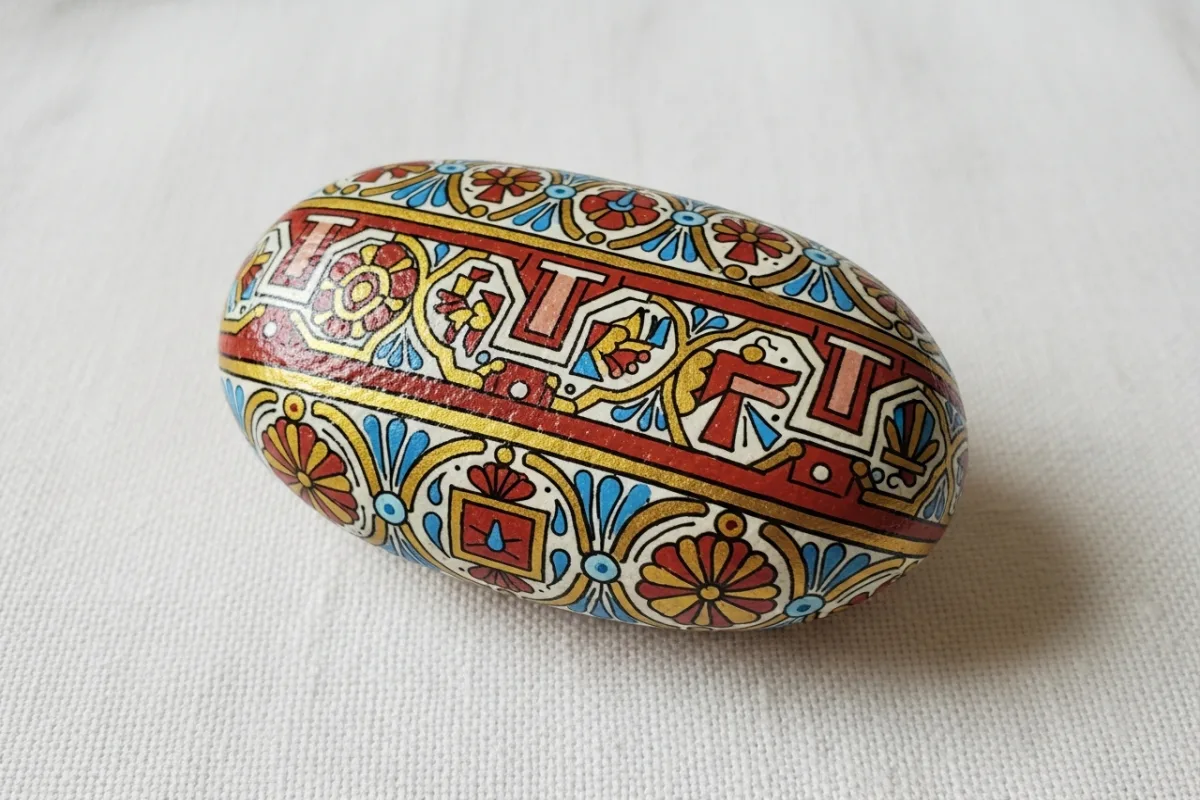
Italian rock painters draw on one of the world's richest artistic heritages:
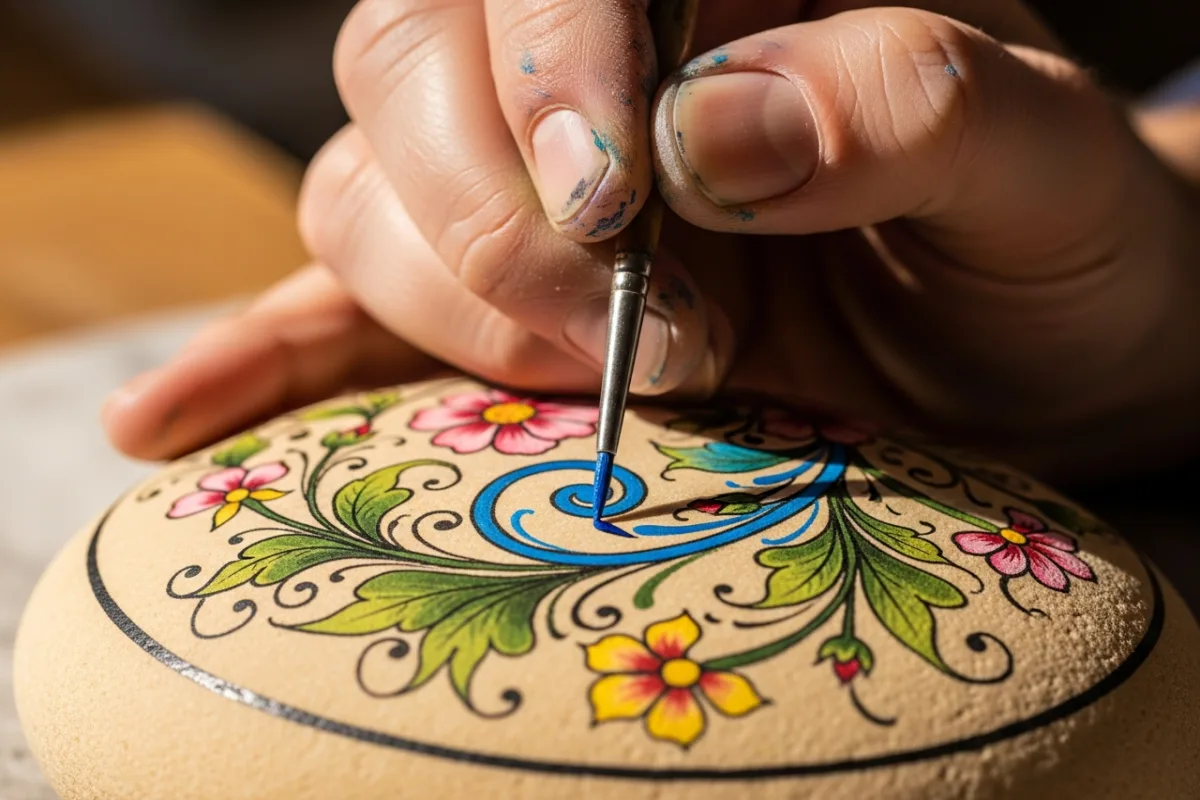
- Ceramica di Deruta — The intricate blue-and-white majolica patterns of Deruta (Umbria) translate magnificently to stone. Flowing scrollwork, stylised flowers, and decorative borders.
- Arte siciliana — The bold, warm colours of Sicilian folk art — oranges, reds, and golden yellows — with theatrical figures, carts, and citrus motifs.
- Marmorizzazione — The Florentine tradition of marbled paper patterns creates stunning abstract designs on smooth stones.
- Mosaico — Inspired by Italy's Roman and Byzantine mosaic tradition, creating tessellated geometric designs in earthy reds, ochre, and deep blue.
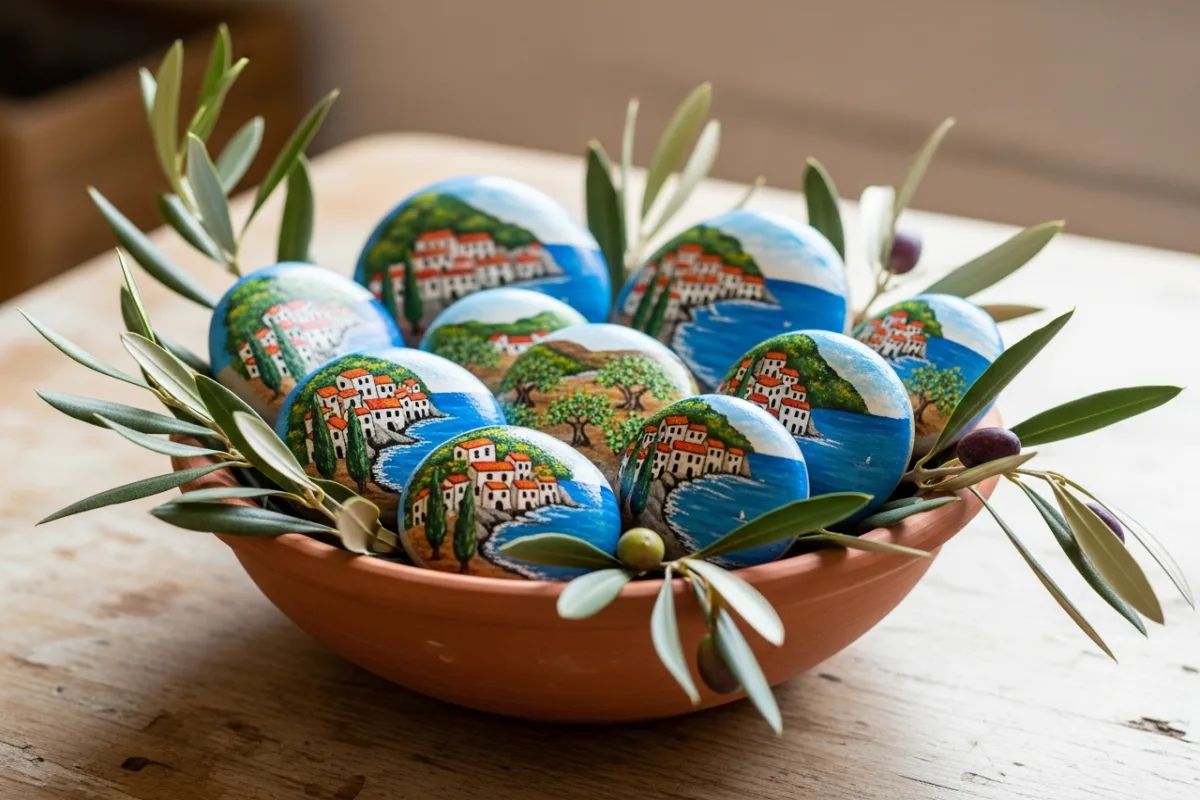
- Paesaggi italiani — Miniature Italian landscapes: the rolling Tuscan hills, Amalfi coast cliffs, Venetian canals, and Dolomite peaks.
Best Hiding Spots in Italy
Italy's extraordinary cities and landscapes offer memorable hiding locations:
- Giardini pubblici — Italy's public gardens, from the Villa Borghese in Rome to the Giardini di Boboli in Florence, attract locals and tourists who appreciate art.
- Lungofiume e lungolago — The banks of the Arno, Tiber, Po, and the shores of Lake Como and Lake Garda provide natural pebbles and beautiful hiding spots.
- Borghi storici — The stone streets of medieval Italian villages (Civita di Bagnoregio, Alberobello, Pitigliano) are irresistibly evocative places to leave painted rocks.
Always follow local rules — in archaeological sites and protected UNESCO areas, leaving any objects is strictly prohibited.
Connecting with Italian Rock Painting Groups
To join the Italian sassi dipinti community:
- Search Facebook for "Sassi Dipinti" or "Pietre Dipinte" plus your region or city.
- Hashtags #sassidipinti, #pietredipinte, and #sassidecorati are active on Instagram with thousands of posts.
- Many Italian groups organise seasonal themed events — Easter, Christmas, and summer sea-themed events are particularly popular.
For more on international communities, see our worldwide community guide.
Frequently Asked Questions
What is the Italian term for painted rocks?
The most common terms are sassi dipinti (painted stones/pebbles), pietre dipinte (painted stones), and sassi decorati (decorated pebbles). Regional variations exist: in Sicily you may hear ciotoli dipinti, in the north sometimes ciottoli decorati.
Where can I find good sassi for painting in Italy?
Italian river banks — particularly the Arno, Adige, and the rivers of Calabria — produce excellent smooth stones. Garden centres (vivai) throughout Italy sell decorative river pebbles. Brico stores carry bags of smooth sassi. Online, Amazon.it and Etsy.it have painting-specific stones.
Are there painting materials specific to the Italian community?
Italian rock painters often use fine-tip acrylic markers (Posca pens) for precise detailing, which suits the intricate Italian design traditions. Gold and silver metallic paints are particularly popular for creating the opulent look of Italian decorative arts. Mod Podge and outdoor Italian varnishes (available at Leroy Merlin and Brico) are the standard sealers.