Back to Templates
Crab Rock Painting
Materials Needed
- Wide, flat oval or round rock
- Bright red or orange acrylic paint
- Dark red or brown acrylic paint
- White acrylic paint
- Black acrylic paint
- Yellow acrylic paint (for sandy base)
- Medium flat brush
- Fine detail brush
- Clear sealant spray
- Pencil
Step-by-Step Instructions
1
Step 1: Paint a sandy ocean background
Wash and dry your flat rock. Paint the entire surface with sandy yellow or beige paint. Add a thin strip of light blue at the top of the rock for the sea. This background sets the beach scene before the crab is painted on top.
2
Step 2: Sketch and paint the crab body
Sketch an oval or rounded trapezoid shape for the crab body in the center of the rock. Paint it bright red or orange. Add a slightly darker shade on the edges to suggest the dome-shaped carapace (shell). Two small eyes on stalks can be suggested as tiny bumps at the front.
3
Step 3: Paint the claws
Paint two large claws (chelae) extending from the front of the body. Each claw has a wider upper arm and a pincer at the end - paint a thick curved arm with two pointed finger shapes at the tip. Make the claws proportionally large - they should look powerful.
4
Step 4: Add the legs
Paint four thin walking legs on each side of the body (eight legs total). They should be jointed - paint them as two segments that bend at an angle. Crabs walk sideways, so position the legs extending to the sides and slightly forward.
5
Step 5: Add details and seal
Paint two small white eyes on tiny stalks at the front of the body. Add curved lines on the carapace with dark red to suggest texture. Add white highlights on the top of the claws for a shiny shell effect. Once dry, apply clear sealant.
Step 6: Add RoxGeo Code
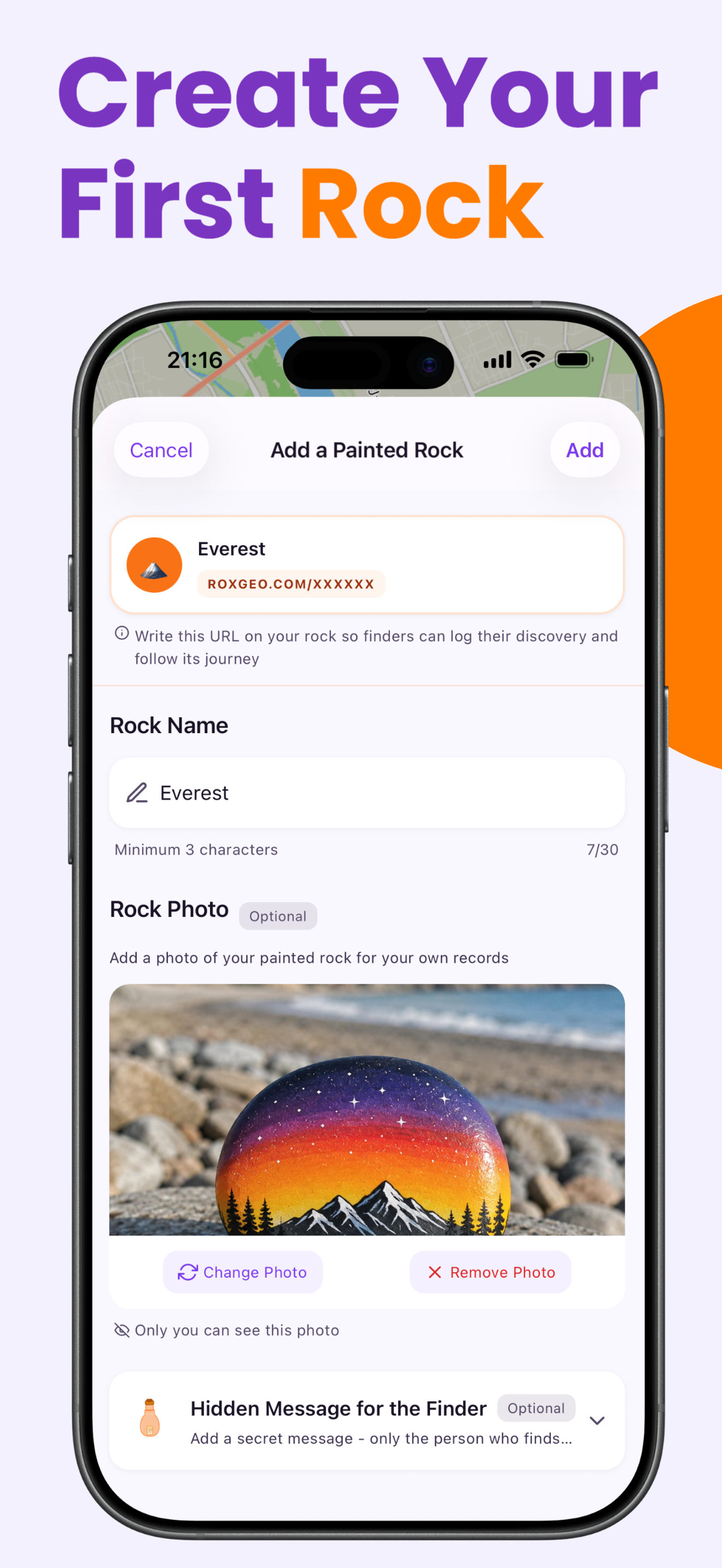
On the bottom or back of your rock, write ROXGEO.COM followed by a slash and your rock’s unique code (e.g. ROXGEO.COM/ABC123). This lets the finder go directly to your rock’s profile page and log their discovery. If the rock is too small for the full address, write #ROX followed by the code without spaces (e.g. #ROXABC123) — it’s short, easy to search on Google, and leads straight to your rock’s journey page. Use a fine-tip permanent marker or acrylic paint pen, and seal it with clear varnish so the code stays readable through rain, sun, and adventure.
Helpful Tips
- Wide, flat rocks work best because crabs are wider than they are tall.
- Make the claws as large as the body - that's what makes crabs look instantly recognizable.
- A sandy yellow background makes the red crab pop visually.
- Reference a photo of a real crab when drawing the jointed legs for accuracy.
- Try blue or purple for a fantastical sea creature instead of realistic red.
- For the RoxGeo code on the bottom, use a waterproof permanent marker (like Sharpie) or an acrylic paint pen. Apply 2–3 coats of clear sealant over the code — this keeps it readable through rain, sun, and handling for months.
- Writing #ROXCODE (e.g. #ROXABC123) on your rock makes it easy to find via Google search. We actively optimize for this hashtag, so anyone who searches for it will find your rock’s profile page quickly.
- The full address ROXGEO.COM/CODE takes the finder directly to your rock’s card, where they can see its full travel history, previous finders, and photos from every stop on its journey.
Paint this rock and track its journey with RoxGeo!
Download RoxGeo Free