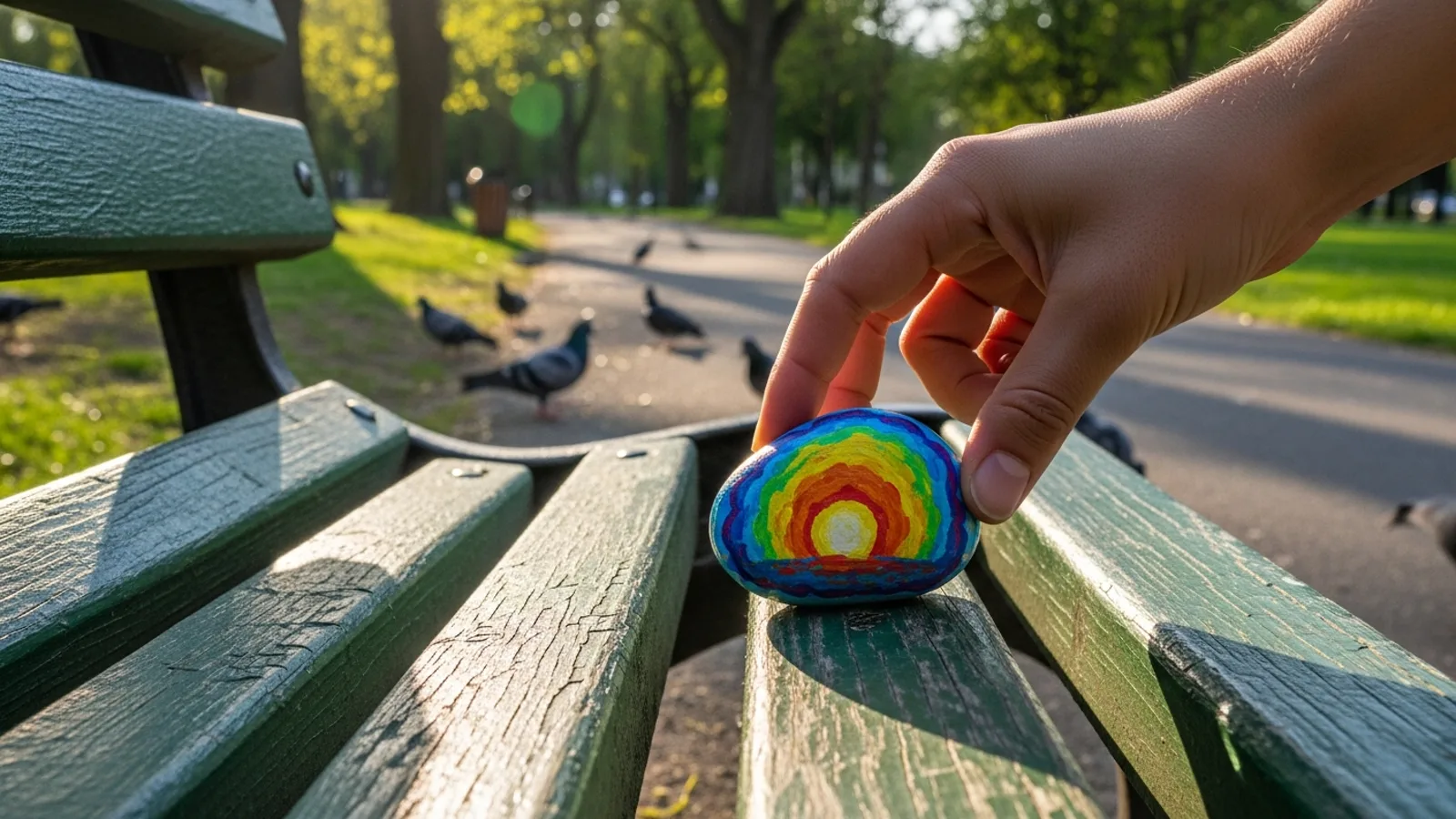
Knowing where to hide painted rocks legally and responsibly is essential for every rock painter. While the hobby is meant to spread joy, hiding rocks in the wrong places can lead to removal, complaints, or even legal issues. This legal guide covers the best and worst locations for hiding painted rocks, organised by location type.
Great Places to Hide Rocks
Public Parks
Most public parks welcome painted rocks as long as they are placed responsibly. Good spots include park benches, along pathway edges, at playground borders, and near informational signs. Always check if your local park has specific rules about leaving objects - some parks with strict maintenance policies may remove anything that is not part of the official landscaping.
Community Spaces
Libraries, community centres, and public gardens often embrace painted rocks. Some even have designated rock gardens or display areas. Contact the venue beforehand to ask about their policy - many will actively welcome your painted rocks as they bring visitors joy.
Walking and Hiking Trails
Trail edges, rest areas, and viewpoint benches are excellent hiding spots. Hikers and walkers enjoy discovering painted rocks during their outdoor activities. Place rocks where they are visible but do not block the trail or create tripping hazards. Avoid hiding rocks off-trail in natural vegetation.
Urban Surfaces
Window ledges, wall tops, and fence posts in urban public areas can work well. Choose spots where the rock will not fall and injure someone or damage property. Urban rocks are often found quickly, which keeps the journey active.

Places to Avoid
Private Property
Never hide rocks on private property without the owner's explicit permission. This includes private gardens, driveways, apartment building grounds (unless you live there), and commercial premises. Even well-intentioned rock hiding on private property can be considered littering or trespassing.
Environmentally Sensitive Areas
National parks, nature reserves, wildlife sanctuaries, and protected habitats often have strict rules against leaving any objects, including painted rocks. Even eco-friendly painted rocks can disrupt sensitive ecosystems. Always research the specific rules of any natural area before hiding rocks there.
Near Water Sources
Avoid hiding rocks in streams, rivers, ponds, or near drinking water sources. Even with non-toxic paints, rocks can be washed away and the paint may eventually leach into the water. This also applies to beaches in protected marine areas.
Hazardous Locations
Never hide rocks where they could cause injury - on staircases, in traffic areas, near moving machinery, or anywhere a falling rock could harm someone. Safety always comes first.

Location-Specific Rules
- School grounds: Always get permission from the school administration before hiding rocks on school property.
- Hospitals and care facilities: Check with facility management. Many welcome kindness rocks but have hygiene policies about outside objects.
- Beaches: Public beaches are generally fine, but avoid dune systems and marine-protected areas.
- Cemeteries: Only place memorial rocks on your own family's plots, never on others'.
The Golden Rules
- When in doubt, ask - if you are unsure whether a location is appropriate, contact the property owner or managing authority.
- Hide responsibly - place rocks where they will bring joy without causing inconvenience or harm.
- Follow local regulations - laws vary by region and country. What is acceptable in one area may not be in another.
- Be prepared for removal - even in permitted locations, maintenance crews may remove rocks. This is normal and not personal.
For comprehensive community guidelines on responsible rock hiding and painting, visit our rules page. Happy and responsible hiding!