Summer is the peak season for beach rock painting — and for good reason. Sandy beaches provide an endless supply of smooth, water-polished stones, the outdoor setting creates a relaxed painting atmosphere, and the coastal environment provides instant design inspiration. Whether you are painting at the beach itself or bringing stones home to paint, these summer beach rock painting ideas for 2026 cover everything from beginner-friendly designs to advanced techniques for the ocean-obsessed.
Finding the Best Beach Rocks for Painting
Before you paint, you need to collect. Beach rocks offer some of the smoothest surfaces available for painting — waves and sand have spent years polishing them. What to look for:
- Smooth, rounded surface — the more polished by the sea, the better the paint adhesion.
- Flattish shape — slightly flat rocks are easier to paint and display without rolling.
- Light colour — pale grey, white, or sandy-coloured rocks show paint colours most accurately.
- No cracks or splits — sea exposure can create surface fractures that will crack paint.
Always check local rules about beach rock collection. In the UK, removing pebbles from beaches in large quantities is regulated. Take only what you genuinely need for your art. See our legal guide on finding rocks for painting.
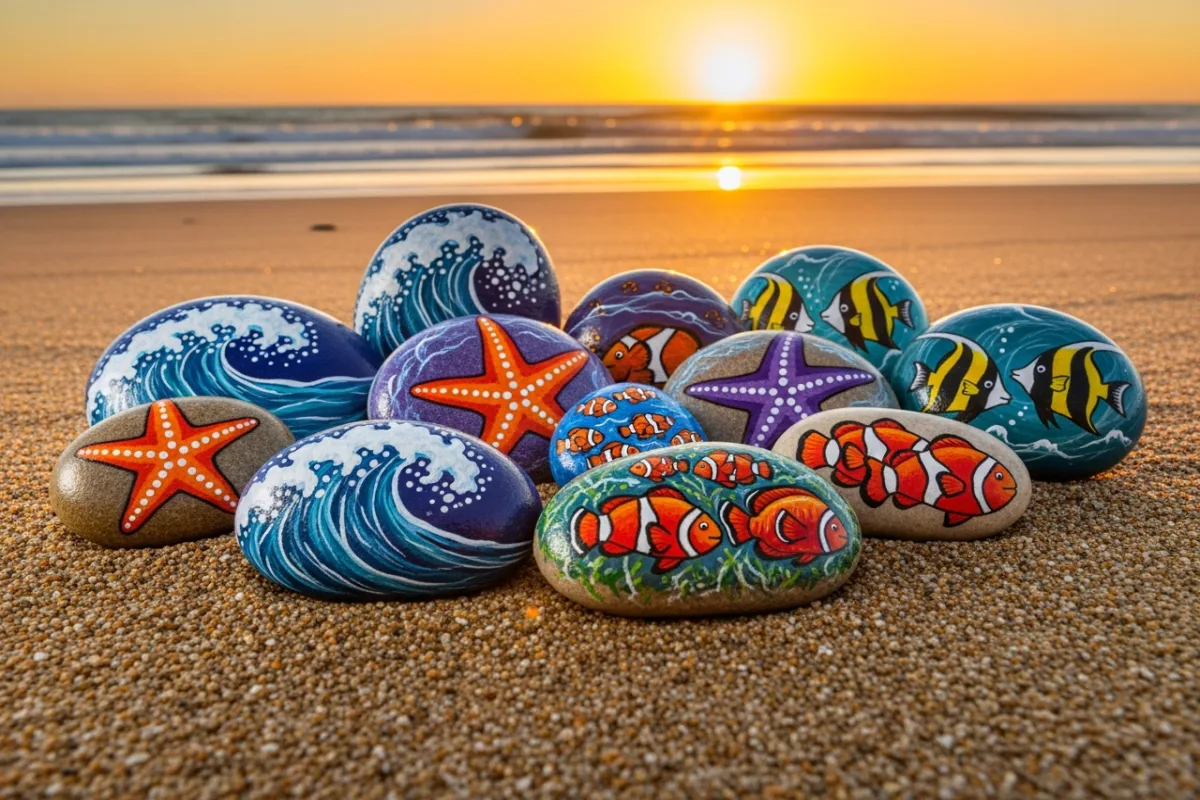
Top Ocean and Beach Design Ideas for 2026
These designs are trending in the rock painting community for summer 2026:
- Sunset over the sea — Blend warm oranges, reds, and pinks in the top half of the stone, add a silhouetted horizon line with waves, and reflect the colours in the sea below. Stunning and achievable for intermediate painters.
- Sea turtle — One of the most loved beach designs. Paint the shell in patterned greens and browns, the body in soft sage, and add detail with fine black liner lines. Always popular and symbolically meaningful for ocean conservation.
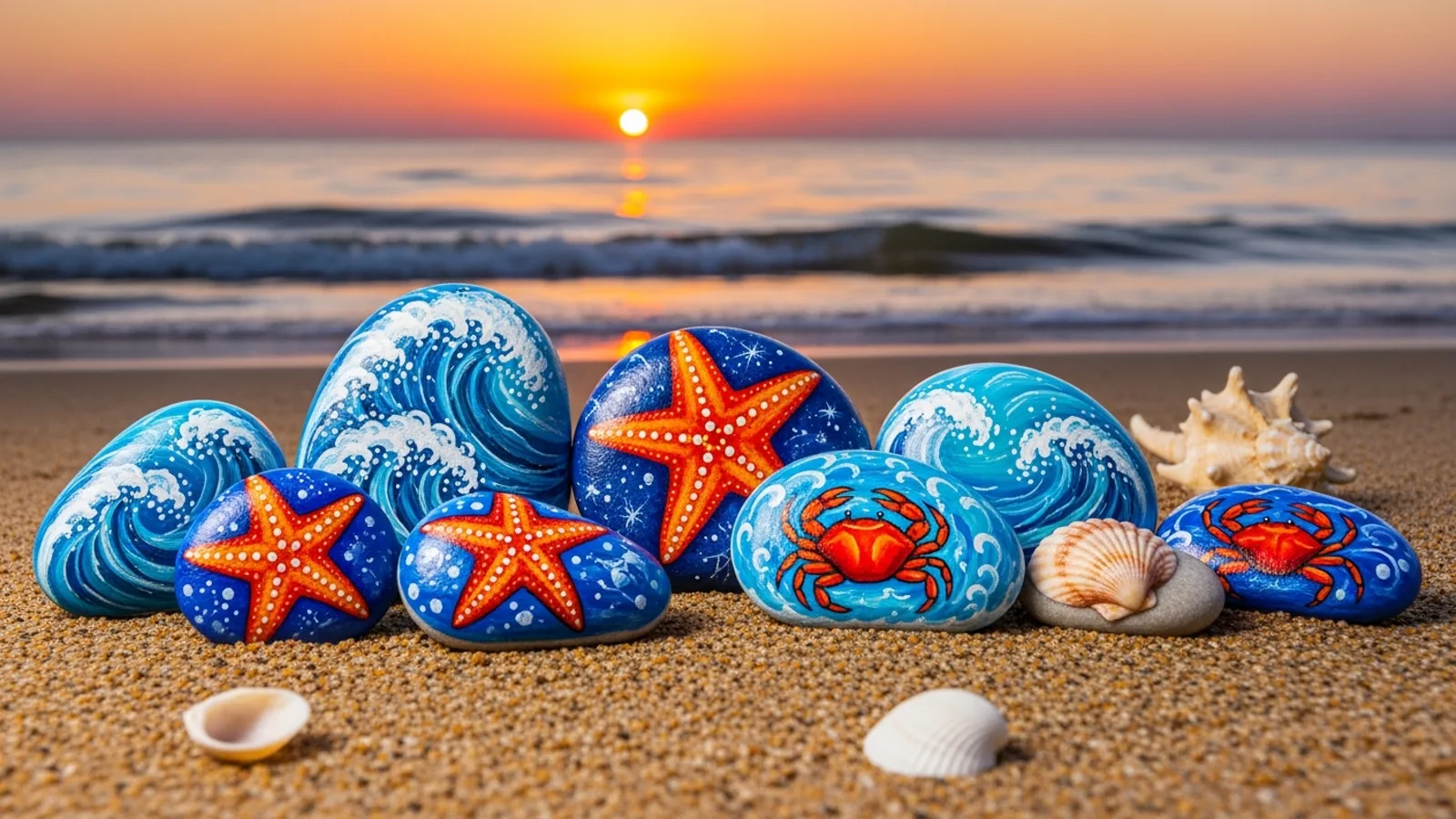
- Starfish on sand — An orange or coral starfish with textured pattern on a sandy background. Simple, recognisable, and quintessentially beachy.
- Wave pattern — A single cresting wave in cobalt blue and white, inspired by Hokusai's Great Wave. Achievable with basic brush control and dramatically effective.
- Crab — Bright orange-red crab with black eyes on a sandy background. Children love this design and adults find it satisfying to paint.
- Underwater scene — An entire miniature world: coral, fish, seaweed, and bubbles on a deep blue background. Best for advanced painters; always a showstopper.
- Lighthouse — A red and white striped lighthouse on a rocky promontory against a stormy or sunny sky. Classic coastal symbolism.
- Mermaid tail — Iridescent blue-green tail scales emerging from the bottom of the stone. Use pearlescent paints for extra shimmer.
Painting at the Beach: Practical Tips
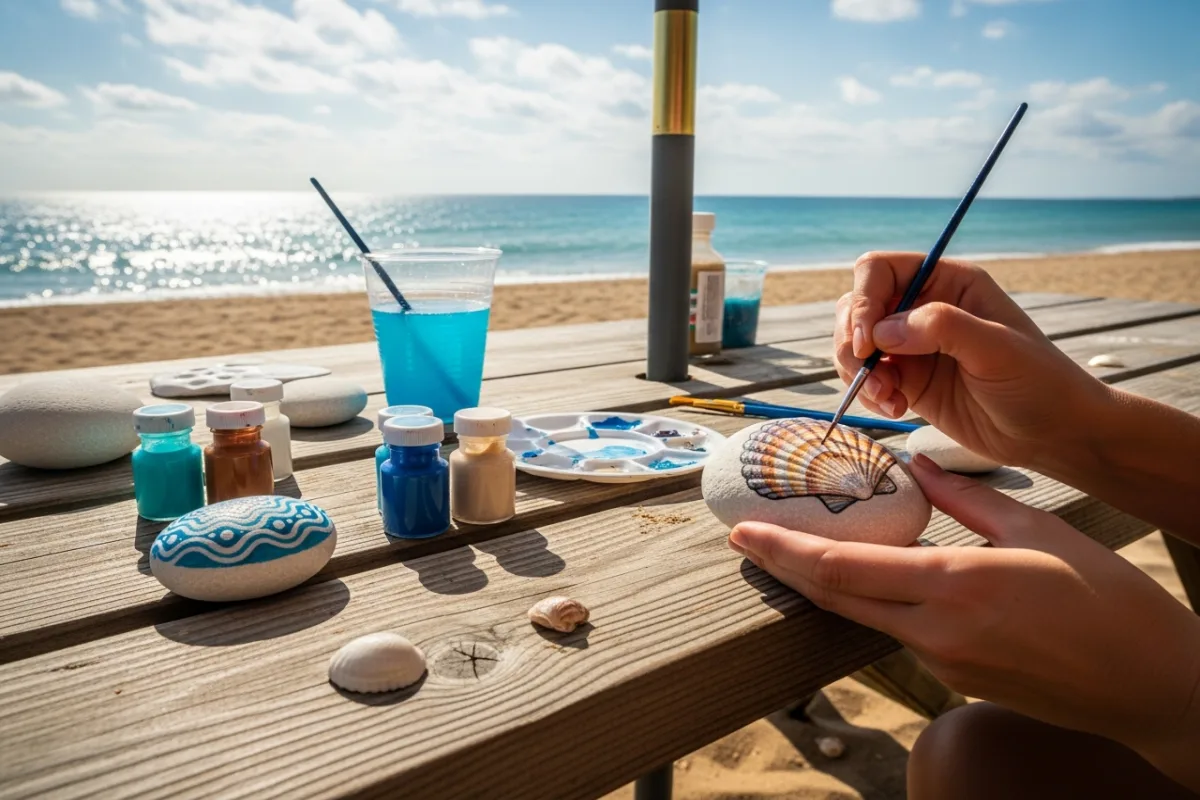
Painting on the beach or in hot, sunny conditions presents challenges that indoor painting does not:
- Paint dries faster — Warm temperatures and sun accelerate acrylic drying. Work in smaller sections and keep your palette moist with a spray bottle of water.
- Grit is your enemy — Even a small grain of sand on your paintbrush or rock will create texture you did not want. Work with clean brushes and keep everything covered between uses.
- Work in shade — Direct sun makes it almost impossible to assess true colours. Shade also keeps the rock cooler and slows paint drying for better blending.
- Bring more supplies than you think you need — Water for rinsing brushes, paper towels, extra brushes, a palette, and sealant for in-the-moment use.
Sealing for Saltwater Survival
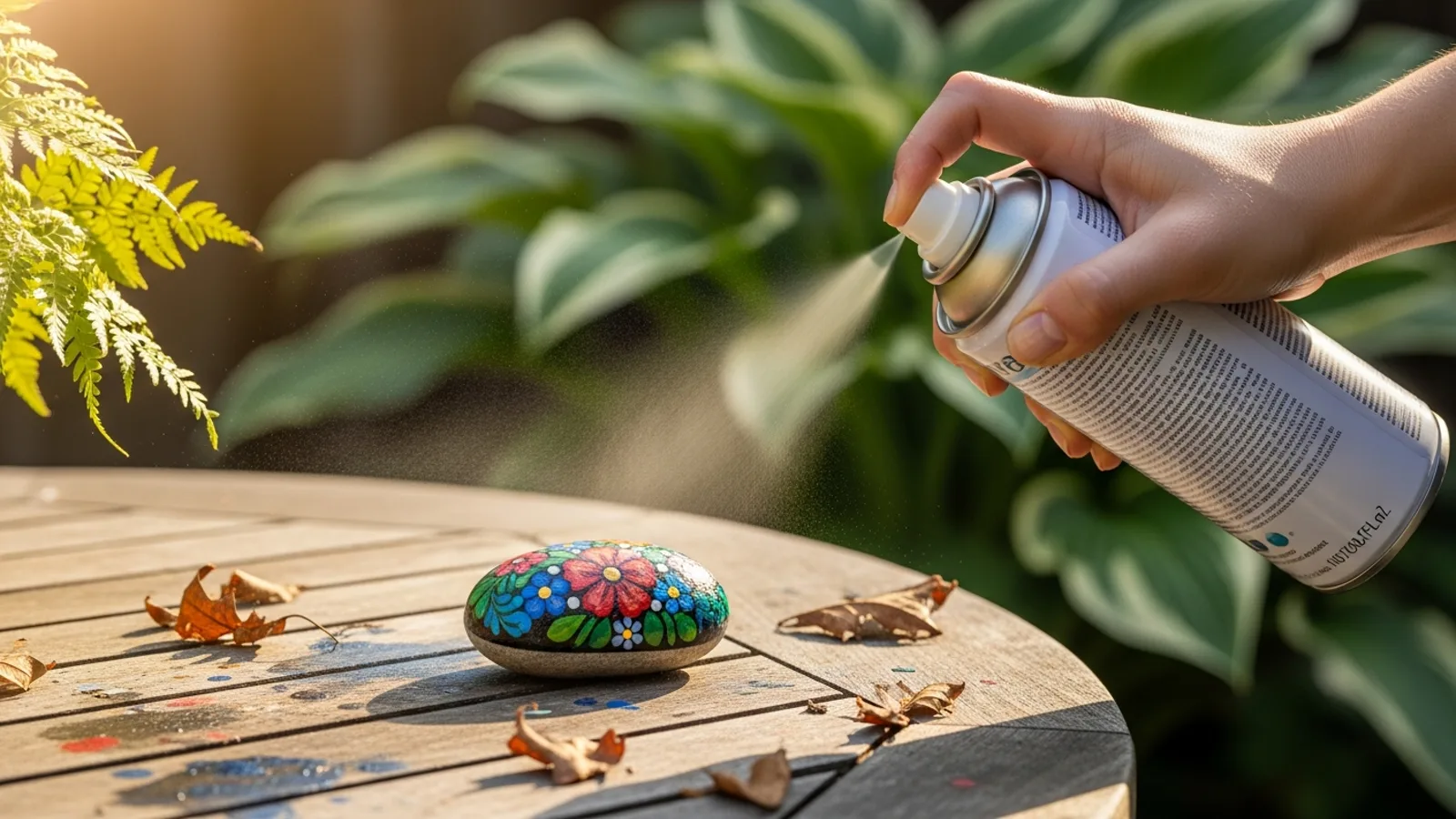
Rocks hidden on a beach are exposed to saltwater, sand, and intense UV — the most challenging outdoor conditions a painted rock can face. To maximise longevity:
- Apply a minimum of 4 coats of outdoor-grade waterproof varnish.
- Use Rust-Oleum Crystal Clear Enamel or a similar solvent-based exterior varnish for the most protection.
- Allow 24 hours of curing time (not just drying time) before placing the rock in a humid or salty environment.
- Avoid leaving rocks in the intertidal zone — the constant wetting and drying will compromise even the best sealer within weeks.
Full sealer recommendations in our rock sealer guide.
Hiding Beach Rocks for Maximum Discovery
Beach environments offer unique and exciting hiding options. Register your rocks with RoxGeo before you hide them and choose spots where finders will genuinely be delighted:
- Tucked into a gap in a sea wall or harbour wall.
- At the base of a beach hut or lifeguard station.
- Placed on a rocky outcropping above the high tide line.
- Left on a beach café table or outdoor terrace (with staff permission).
Always stay above the high tide line — rocks below this point will be washed away and lost. See our rock hiding guide.
Frequently Asked Questions
Can I paint rocks directly on the beach?
Yes, but it requires preparation. Bring your rocks pre-washed and dried (or collect them the previous day). Bring shade, a stable surface to paint on, and a water spray bottle to keep your paints workable. Wait for any completed sections to dry thoroughly before moving or displaying the rock.
How do I stop paint from peeling off beach rocks in saltwater?
Start with a thoroughly cleaned and dried stone. Apply 2 coats of gesso primer. Paint your design. Then apply at least 4 coats of outdoor-rated varnish, allowing full drying between each coat. A solvent-based varnish (Rust-Oleum Enamel) outperforms water-based options in very humid or salty conditions.
Are there beach-specific rock painting groups I can join?
Yes — coastal rock painting communities are very active, particularly in the UK, USA, Australia, and France. Search Facebook or Instagram for "coastal painted rocks [your country]" or "[your nearest beach] painted rocks." The RoxGeo community also connects rock painters by location. See our global community guide.