Back to Templates
Cactus Rock Painting
Materials Needed
- Tall, rounded or oval rock
- Green acrylic paint (medium and dark)
- Terracotta or brown acrylic paint (for pot)
- Pink or yellow acrylic paint (for flowers)
- White acrylic paint
- Black acrylic paint
- Medium flat brush
- Fine detail brush
- Clear sealant spray
- Pencil
Step-by-Step Instructions
1
Step 1: Paint the terracotta pot
Wash and dry your rock. Paint the lower quarter of the rock with terracotta or brown paint to create the pot. Add a slightly lighter band near the top of the pot for the rim. Let dry completely.
2
Step 2: Paint the cactus body
Paint the upper three quarters of the rock with medium green paint for the main cactus column. Add a darker green shade on the sides to give the cylindrical body a rounded, three-dimensional appearance. Include two smaller arm branches curving outward from mid-height.
3
Step 3: Add the spines
Using white or light yellow paint and your fine brush, paint short radiating lines all over the cactus body and arms to represent spines. Work in rows from bottom to top. Each spine cluster should have three to five short lines radiating from a central point. This is the most distinctive cactus feature.
4
Step 4: Add cactus flowers
Paint small pink or yellow flowers blooming at the tops of the cactus arms and main column. Each flower is a star shape with rounded petals. Add a tiny yellow center dot to each flower. Cactus flowers are a burst of color and add great visual contrast.
5
Step 5: Detail the pot and seal
Add small curved lines on the pot to suggest the texture of clay. Add a shadow below the pot rim with a darker terracotta line. Once everything is fully dry, apply clear sealant to protect your desert cactus rock.
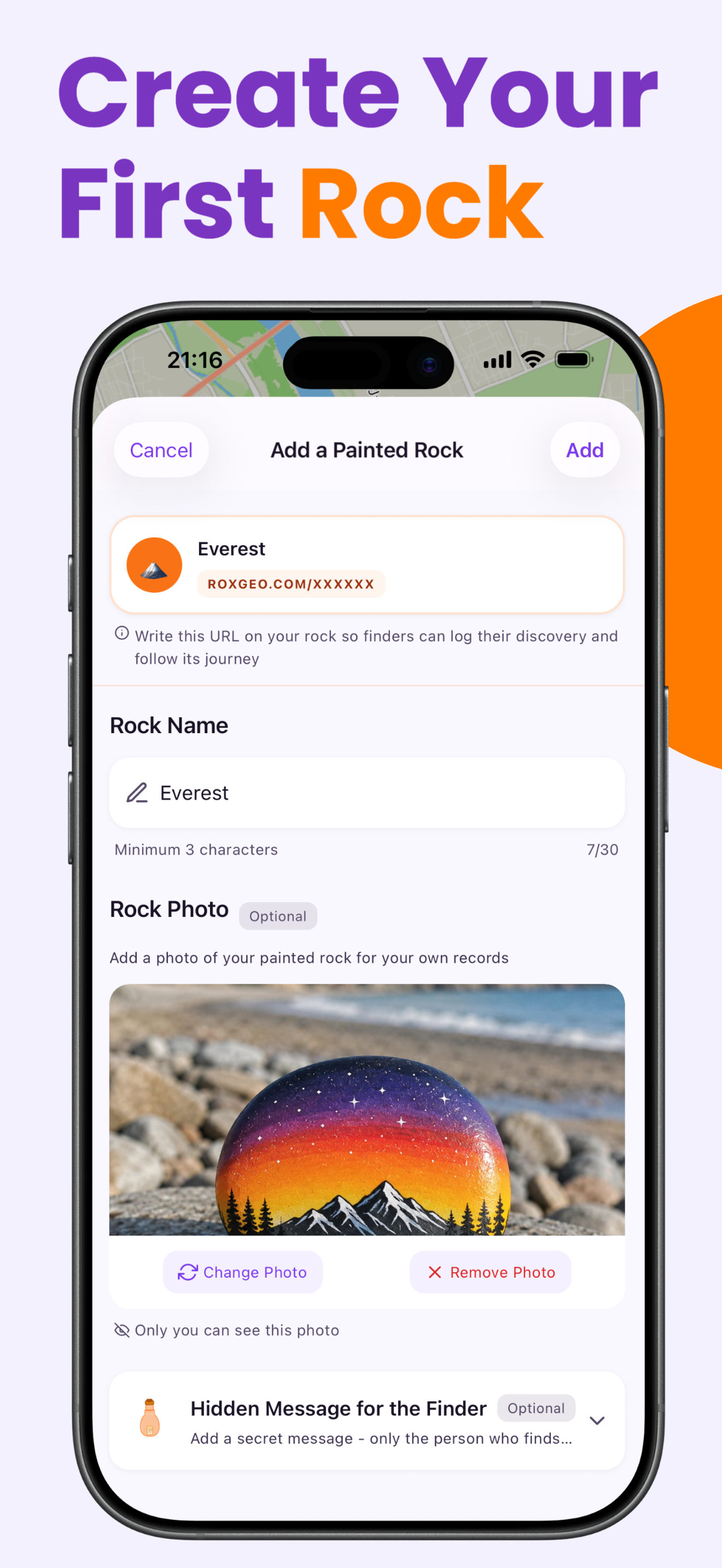
Step 6: Add RoxGeo Code
On the bottom or back of your rock, write ROXGEO.COM followed by a slash and your rock’s unique code (e.g. ROXGEO.COM/ABC123). This lets the finder go directly to your rock’s profile page and log their discovery. If the rock is too small for the full address, write #ROX followed by the code without spaces (e.g. #ROXABC123) — it’s short, easy to search on Google, and leads straight to your rock’s journey page. Use a fine-tip permanent marker or acrylic paint pen, and seal it with clear varnish so the code stays readable through rain, sun, and adventure.
Helpful Tips
- A tall, rounded rock naturally suggests a cactus column standing upright.
- The spine clusters are the defining feature - take time to add them evenly across the body.
- Add pink or yellow flowers on top for a pop of joyful color against the green.
- Try painting several different cactus varieties on rocks of different sizes for a desert scene.
- Cactus rocks make wonderful desk decorations for people who love succulents.
- For the RoxGeo code on the bottom, use a waterproof permanent marker (like Sharpie) or an acrylic paint pen. Apply 2–3 coats of clear sealant over the code — this keeps it readable through rain, sun, and handling for months.
- Writing #ROXCODE (e.g. #ROXABC123) on your rock makes it easy to find via Google search. We actively optimize for this hashtag, so anyone who searches for it will find your rock’s profile page quickly.
- The full address ROXGEO.COM/CODE takes the finder directly to your rock’s card, where they can see its full travel history, previous finders, and photos from every stop on its journey.
Paint this rock and track its journey with RoxGeo!
Download RoxGeo Free