Back to Templates
Deer Rock Painting
Materials Needed
- Oval or elongated flat rock
- Warm brown acrylic paint
- Light tan or cream acrylic paint
- Dark brown acrylic paint
- White acrylic paint
- Black acrylic paint
- Medium flat brush
- Fine detail brush
- Clear sealant spray
- Pencil
Step-by-Step Instructions
1
Step 1: Sketch the deer silhouette
Wash and dry your rock. Using a pencil, lightly sketch the deer as a full face portrait or a side profile depending on your rock shape. For a face portrait, draw a wide oval head, large ears on each side, and branching antlers at the top. Mark a smaller oval for the white muzzle area.
2
Step 2: Paint the base coat
Paint the entire head and ears with warm brown paint. Apply two coats for an even base. Fill the muzzle oval with a lighter tan or cream color. Let each section dry before moving to the next. The contrast between the brown and cream creates the natural deer coloring.
3
Step 3: Paint the antlers
Using dark brown paint and your fine brush, paint two branching antlers rising from the top of the head. Start with the main beam going up and slightly outward, then add two to three tines branching from each beam. Keep the lines thin and organic-looking, wider at the base and tapering to points.
4
Step 4: Add the face details
Paint two large dark brown eyes with small white highlight dots. Add a small oval black nose at the tip of the muzzle. Draw a subtle mouth line. Add darker shading inside the ears and along the jaw for dimension. Use a slightly darker brown for the sides of the face to create depth.
5
Step 5: Add spots and seal
For a fawn look, use white paint and a toothpick to add small scattered spots along the back and sides of the neck. These white spots are typical of young deer. Once everything is fully dry, apply clear sealant to protect your nature-inspired rock.
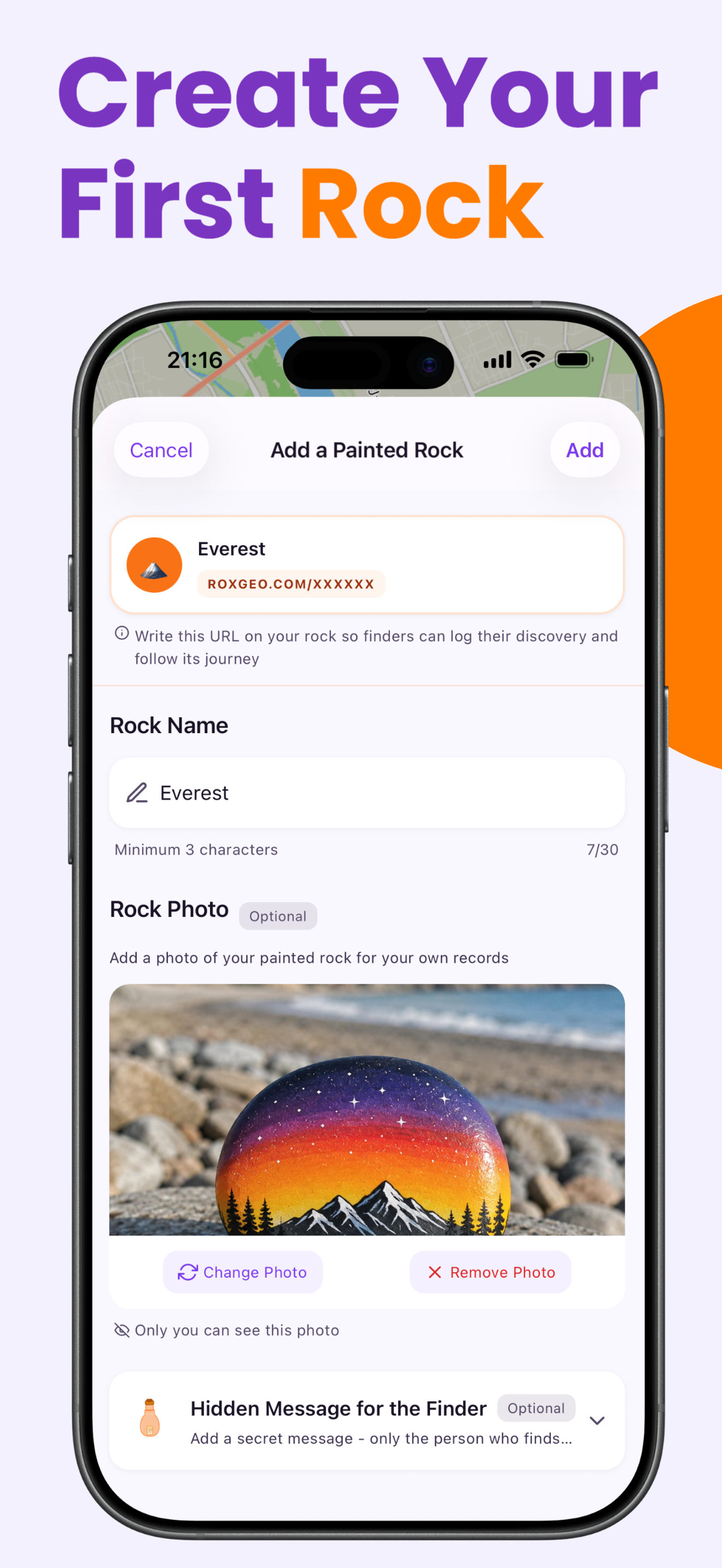
Step 6: Add RoxGeo Code
On the bottom or back of your rock, write ROXGEO.COM followed by a slash and your rock’s unique code (e.g. ROXGEO.COM/ABC123). This lets the finder go directly to your rock’s profile page and log their discovery. If the rock is too small for the full address, write #ROX followed by the code without spaces (e.g. #ROXABC123) — it’s short, easy to search on Google, and leads straight to your rock’s journey page. Use a fine-tip permanent marker or acrylic paint pen, and seal it with clear varnish so the code stays readable through rain, sun, and adventure.
Helpful Tips
- A flat oval rock works best for a front-facing deer portrait.
- Sketch the antler branches lightly with pencil before painting - symmetry matters.
- Layering slightly darker brown on the sides of the face creates a 3D sculpted look.
- White spots made with a toothpick tip are perfectly sized and easy to control.
- A soft blending of cream into brown at the chin creates a realistic gradation.
- For the RoxGeo code on the bottom, use a waterproof permanent marker (like Sharpie) or an acrylic paint pen. Apply 2–3 coats of clear sealant over the code — this keeps it readable through rain, sun, and handling for months.
- Writing #ROXCODE (e.g. #ROXABC123) on your rock makes it easy to find via Google search. We actively optimize for this hashtag, so anyone who searches for it will find your rock’s profile page quickly.
- The full address ROXGEO.COM/CODE takes the finder directly to your rock’s card, where they can see its full travel history, previous finders, and photos from every stop on its journey.
Paint this rock and track its journey with RoxGeo!
Download RoxGeo Free