Back to Templates
Celtic Knot Rock Painting
Materials Needed
- Smooth, flat rock
- Forest green or emerald acrylic paint
- Dark green acrylic paint
- Light green acrylic paint
- Black acrylic paint
- Gold or yellow acrylic paint
- White acrylic paint
- Fine detail brush
- Medium flat brush
- Clear sealant spray
- Pencil and printed reference of a Celtic knot design
Step-by-Step Instructions
1
Step 1: Paint the dark background and plan the design
Wash and dry your rock. Paint the entire surface black or very dark green. Let dry. Print a Celtic knot reference image (a simple triquetra or interlace knot). Transfer the design by sketching it with pencil directly on the dark painted rock. Take your time - Celtic knots require precise planning.
2
Step 2: Paint the knot ribbon strands
Using forest green paint and your fine brush, carefully paint the ribbon strands of the Celtic knot following your pencil lines. Celtic knots consist of continuous interlacing ribbons that loop over and under each other. Keep each ribbon about the same width throughout.
3
Step 3: Create the over-under weaving effect
The most important part of a Celtic knot is showing which strand passes over and which passes under. At each crossing point, one strand is continuous and one is interrupted. Paint the "over" strand as a solid line, and leave a small gap in the "under" strand where they cross. Use slightly darker green in the gap areas.
4
Step 4: Add highlights and shading to the ribbons
Using light green paint, add a highlight line along the center or upper edge of each ribbon strand. This shading suggests that the ribbons are three-dimensional bands, not flat lines. Use darker green for the shaded edges. Gold outlines along the ribbon edges add richness.
5
Step 5: Add gold outlines and seal
Using gold paint and your finest brush, carefully outline the outer edges of all ribbon strands. This gold border makes the Celtic knot look like illuminated manuscript artwork. Apply clear sealant to protect your intricate Celtic design.
Step 6: Add RoxGeo Code
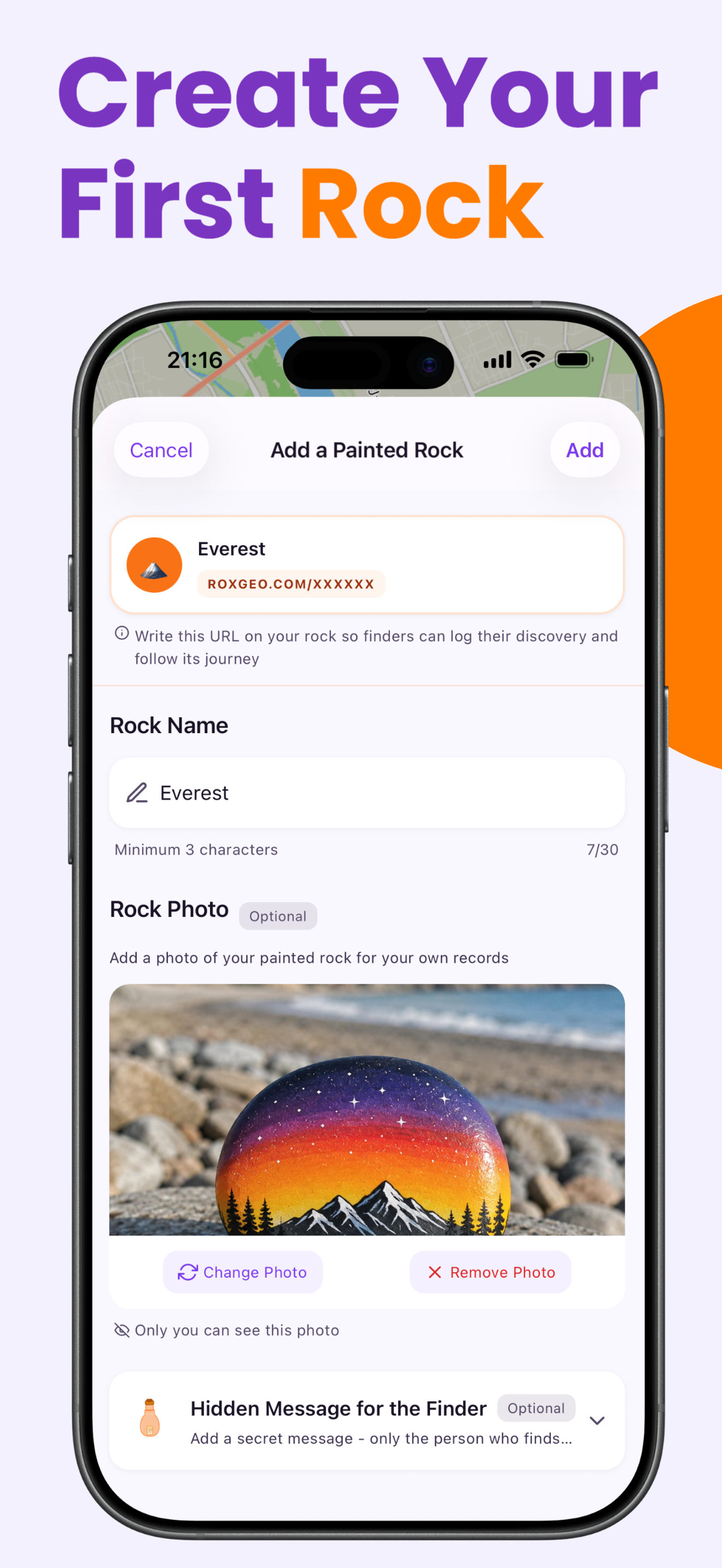
On the bottom or back of your rock, write ROXGEO.COM followed by a slash and your rock’s unique code (e.g. ROXGEO.COM/ABC123). This lets the finder go directly to your rock’s profile page and log their discovery. If the rock is too small for the full address, write #ROX followed by the code without spaces (e.g. #ROXABC123) — it’s short, easy to search on Google, and leads straight to your rock’s journey page. Use a fine-tip permanent marker or acrylic paint pen, and seal it with clear varnish so the code stays readable through rain, sun, and adventure.
Helpful Tips
- Print a reference image of a simple Celtic knot before starting - do not try to design from scratch.
- The over-under weaving is the key to authenticity - every crossing must alternate.
- Highland green on a black background is the classic, most striking Celtic combination.
- Gold outlining of the ribbon edges elevates this from simple green painting to medieval illuminated art.
- Start with a simple triquetra (three-looped) design before attempting complex all-over interlace patterns.
- For the RoxGeo code on the bottom, use a waterproof permanent marker (like Sharpie) or an acrylic paint pen. Apply 2–3 coats of clear sealant over the code — this keeps it readable through rain, sun, and handling for months.
- Writing #ROXCODE (e.g. #ROXABC123) on your rock makes it easy to find via Google search. We actively optimize for this hashtag, so anyone who searches for it will find your rock’s profile page quickly.
- The full address ROXGEO.COM/CODE takes the finder directly to your rock’s card, where they can see its full travel history, previous finders, and photos from every stop on its journey.
Paint this rock and track its journey with RoxGeo!
Download RoxGeo Free