Back to Templates
Crystal Gem Rock Painting
Materials Needed
- Smooth, angular rock (preferably with flat surfaces)
- Purple acrylic paint (multiple shades)
- Light purple or lavender acrylic paint
- White acrylic paint
- Dark purple or black acrylic paint
- Blue acrylic paint
- Fine detail brush
- Medium flat brush
- Small angled brush
- Clear sealant spray
- Pencil (for sketching facets)
Step-by-Step Instructions
1
Step 1: Plan the facets
Wash and dry your rock. Using a pencil, divide the surface into geometric facets - triangles and irregular polygons that look like the flat surfaces of a cut gemstone. Draw lines from a central point outward for a realistic crystal structure.
2
Step 2: Paint the base shades
Fill each facet with a different shade of purple, blue, or lavender. Facets that would catch light should be lighter colors, while those in shadow should be darker. This creates the illusion of a three-dimensional gem.
3
Step 3: Define the edges
Using your fine detail brush and white paint, carefully trace along the pencil lines where facets meet. These white lines represent the sharp edges where light catches on a real crystal. Keep lines straight and crisp.
4
Step 4: Add light reflections
On the lightest facets, add a bright white highlight - a small, elongated shape that represents the light source reflection. Add subtle white or light blue streaks on adjacent facets to show light scattering through the crystal.
5
Step 5: Add depth shadows and seal
Deepen the darkest facets with a touch of dark purple or black along their edges. Add a subtle shadow beneath the crystal at the rock base using dark paint. Once fully dry, apply clear sealant for a glossy, gem-like finish.
6
Step 6: Final touches
Review your gem for color balance. Adjust any facets that need more contrast. Add tiny sparkle dots with white paint near the brightest highlight. Apply a second coat of sealant for extra shine that mimics a polished gemstone.
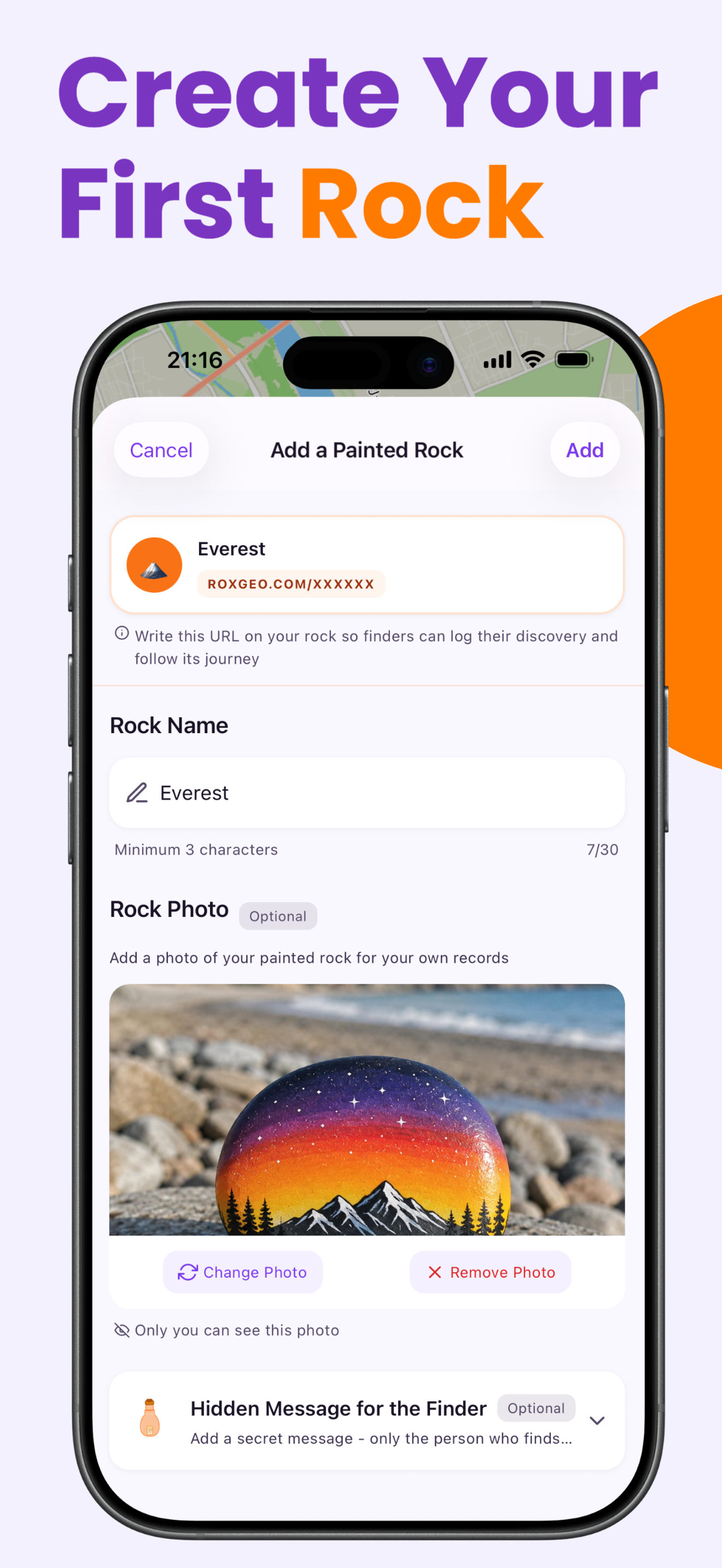
Step 7: Add RoxGeo Code
On the bottom or back of your rock, write ROXGEO.COM followed by a slash and your rock’s unique code (e.g. ROXGEO.COM/ABC123). This lets the finder go directly to your rock’s profile page and log their discovery. If the rock is too small for the full address, write #ROX followed by the code without spaces (e.g. #ROXABC123) — it’s short, easy to search on Google, and leads straight to your rock’s journey page. Use a fine-tip permanent marker or acrylic paint pen, and seal it with clear varnish so the code stays readable through rain, sun, and adventure.
Helpful Tips
- Study photos of real gemstones like amethyst, sapphire, or diamond to understand facet patterns.
- The key to realism is contrast - make the lightest facets very light and the darkest very dark.
- Use an angled brush for sharp, straight lines along facet edges.
- Try different gem colors: blue for sapphire, red for ruby, green for emerald.
- Multiple coats of glossy sealant enhance the gem-like appearance significantly.
- Practice the facet pattern on paper before painting on the rock.
- For the RoxGeo code on the bottom, use a waterproof permanent marker (like Sharpie) or an acrylic paint pen. Apply 2–3 coats of clear sealant over the code — this keeps it readable through rain, sun, and handling for months.
- Writing #ROXCODE (e.g. #ROXABC123) on your rock makes it easy to find via Google search. We actively optimize for this hashtag, so anyone who searches for it will find your rock’s profile page quickly.
- The full address ROXGEO.COM/CODE takes the finder directly to your rock’s card, where they can see its full travel history, previous finders, and photos from every stop on its journey.
Paint this rock and track its journey with RoxGeo!
Download RoxGeo Free