Back to Templates
Lighthouse Rock Painting
Materials Needed
- Tall, narrow or oval rock
- White acrylic paint
- Red acrylic paint
- Dark blue or navy acrylic paint (for sea)
- Light blue acrylic paint (for sky)
- Yellow or gold acrylic paint (for light beam)
- Gray acrylic paint (for rocks)
- Medium flat brush
- Fine detail brush
- Clear sealant spray
- Pencil
Step-by-Step Instructions
1
Step 1: Paint the sky and sea background
Wash and dry your tall rock. Paint the upper portion with light blue for the sky and the lower portion with dark navy blue for the sea. Blend where they meet at the horizon. Paint gray rocky shapes at the very bottom for the cliff the lighthouse stands on.
2
Step 2: Paint the lighthouse tower
Paint a tall, tapering white rectangle/cylinder rising from the rocky base, taking up about half the height of the rock. Lighthouses taper slightly from base to top. Add horizontal red stripes across the white tower at regular intervals - this is the classic lighthouse striped pattern.
3
Step 3: Add the lantern room and light
At the top of the tower, paint a small round or octagonal lantern room section. Use gray for the frame and yellow for the glass. Above that, paint a tiny gallery railing with thin vertical and horizontal black lines. Add a beam of golden yellow light radiating outward from the lantern room across the sky.
4
Step 4: Add windows and door
Paint small rectangular windows along the tower at intervals between the stripes. Add a small arched door at the base of the tower. Use dark blue or black for the window panes with a tiny white cross of light for a windowed effect.
5
Step 5: Add sea details and seal
Add small white wave shapes on the sea surface with a fine brush. Add wispy white cloud shapes in the sky. Once everything is fully dry, apply clear sealant to protect your coastal lighthouse scene.
Step 6: Add RoxGeo Code
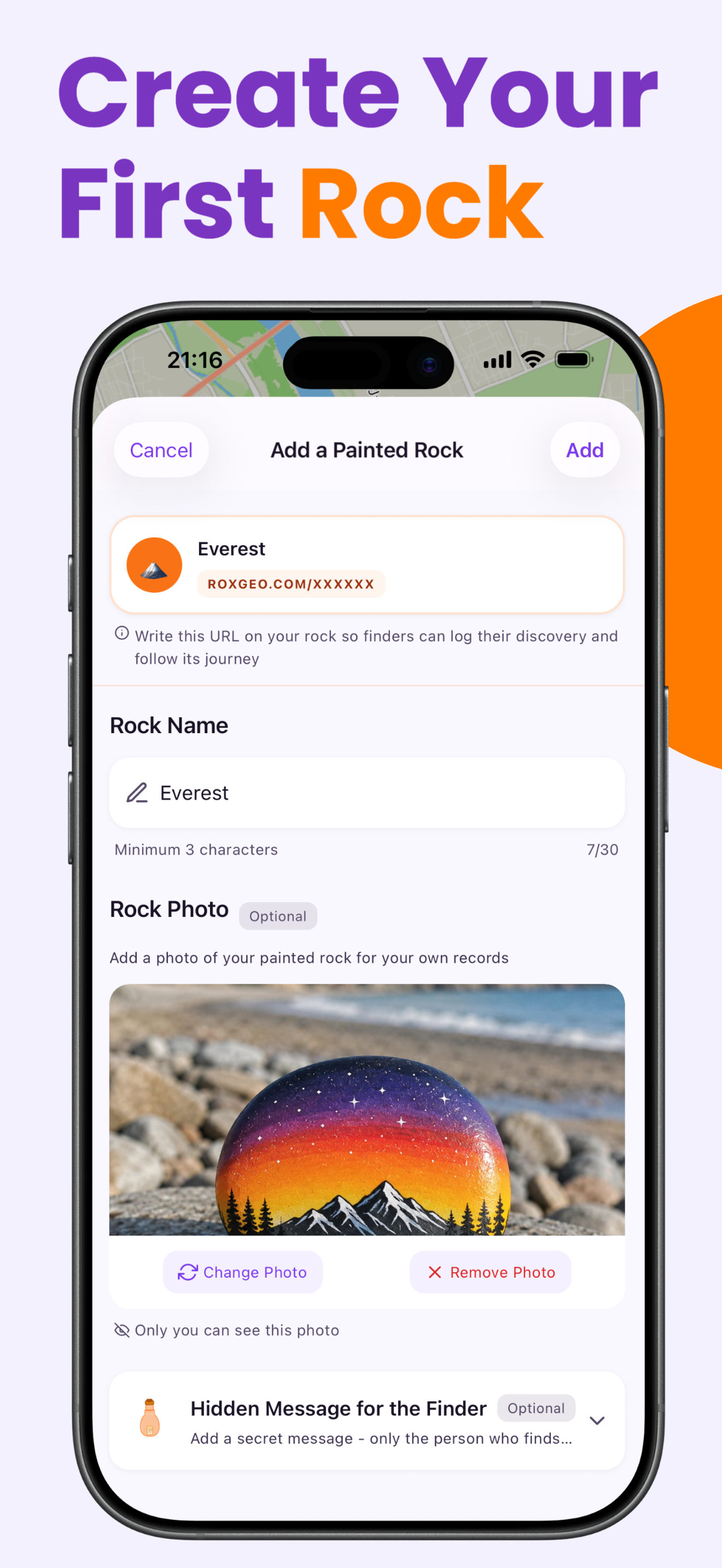
On the bottom or back of your rock, write ROXGEO.COM followed by a slash and your rock’s unique code (e.g. ROXGEO.COM/ABC123). This lets the finder go directly to your rock’s profile page and log their discovery. If the rock is too small for the full address, write #ROX followed by the code without spaces (e.g. #ROXABC123) — it’s short, easy to search on Google, and leads straight to your rock’s journey page. Use a fine-tip permanent marker or acrylic paint pen, and seal it with clear varnish so the code stays readable through rain, sun, and adventure.
Helpful Tips
- A tall, narrow rock is perfect for a lighthouse - the proportions naturally match.
- The red and white stripes are the most recognizable lighthouse feature - make them bold.
- A golden light beam radiating from the lantern room makes the painting feel alive and purposeful.
- Adding white wave crests on the dark sea creates strong visual contrast.
- Try a night scene version with a dark sky and the light beam cutting through darkness.
- For the RoxGeo code on the bottom, use a waterproof permanent marker (like Sharpie) or an acrylic paint pen. Apply 2–3 coats of clear sealant over the code — this keeps it readable through rain, sun, and handling for months.
- Writing #ROXCODE (e.g. #ROXABC123) on your rock makes it easy to find via Google search. We actively optimize for this hashtag, so anyone who searches for it will find your rock’s profile page quickly.
- The full address ROXGEO.COM/CODE takes the finder directly to your rock’s card, where they can see its full travel history, previous finders, and photos from every stop on its journey.
Paint this rock and track its journey with RoxGeo!
Download RoxGeo Free