Ready to move beyond basic rock painting and try something truly impressive? Mandala and galaxy designs are among the most beautiful and rewarding rock art projects. They look complex, but with the right techniques and a bit of patience, kids ages 7–14 can create stunning results that look like professional artwork.
In this guide, we break down both designs with detailed techniques, material recommendations, and tips to help young artists create show-stopping painted rocks.
Mandala Rock Painting: The Art of Dots
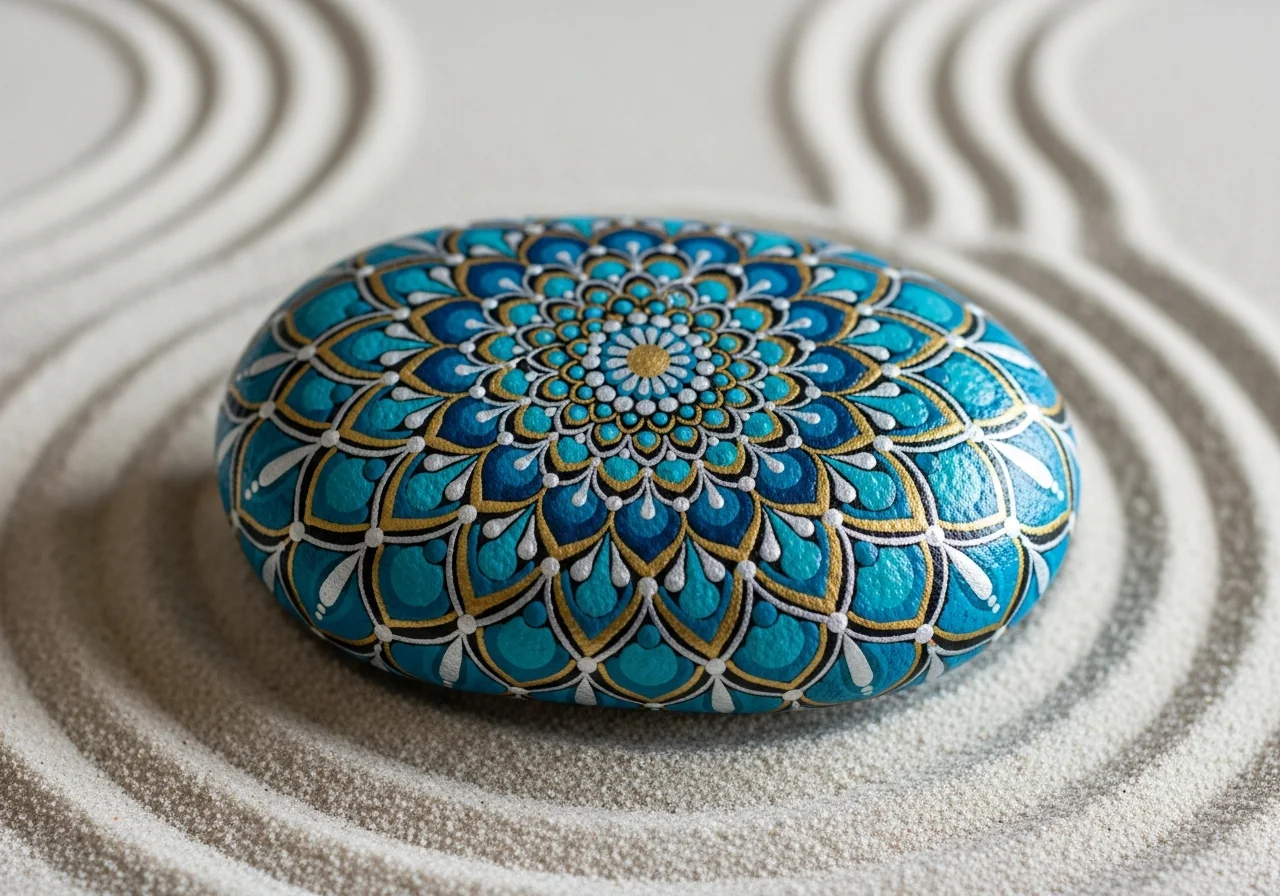
Mandala rock painting has taken the craft world by storm - and for good reason. The repetitive dotting technique is meditative, relaxing, and produces mesmerising results. Our Mandala template walks you through the full process step by step, but here is a deeper look at the techniques that make mandala rocks shine.
What Makes a Great Mandala Rock?
A mandala is a symmetrical pattern built outward from a central point. On a rock, this means starting with a single dot in the centre and adding concentric rings of dots, each ring larger and more elaborate than the last. The beauty lies in the rhythm and repetition.
Essential Dotting Techniques
- The centre dot: Start with a large dot in the exact centre of your rock. Use the rounded end of a paintbrush handle or a large dotting tool. This anchoring dot sets the foundation for everything that follows.
- Graduated dots: As you move outward, vary your dot sizes. Large dots near the centre, medium dots in the middle rings, tiny dots at the edges. This creates visual depth and movement.
- Even spacing: Consistent spacing between dots is the secret to a polished mandala. Count your dots as you go - for example, 6 dots in the first ring, 12 in the second, 18 in the third - doubling or adding six each time.
- Colour transitions: Choose 3–5 colours that flow together. Warm palettes (red, orange, yellow, gold) or cool palettes (blue, teal, purple, white) both work beautifully. Apply each colour as a complete ring before moving to the next.
Tools for Mandala Painting
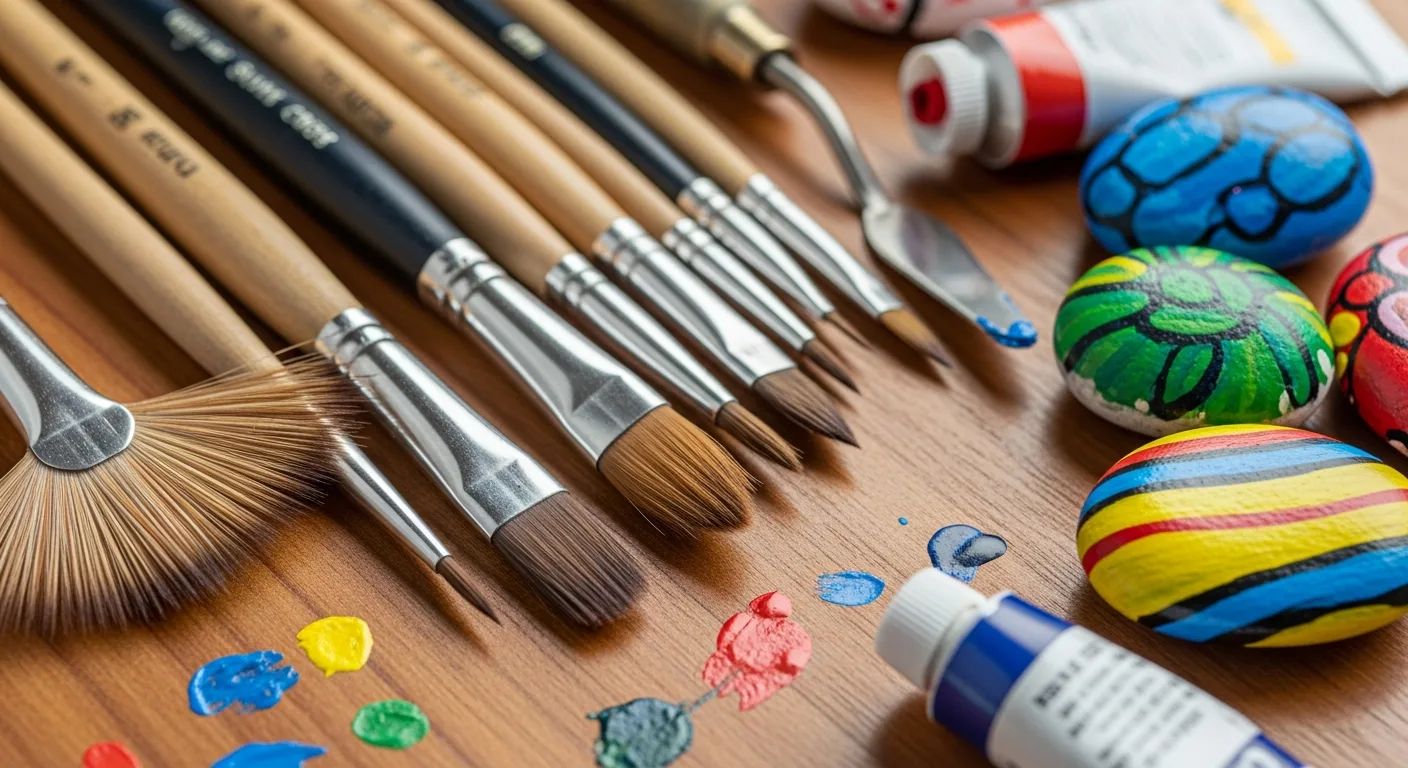
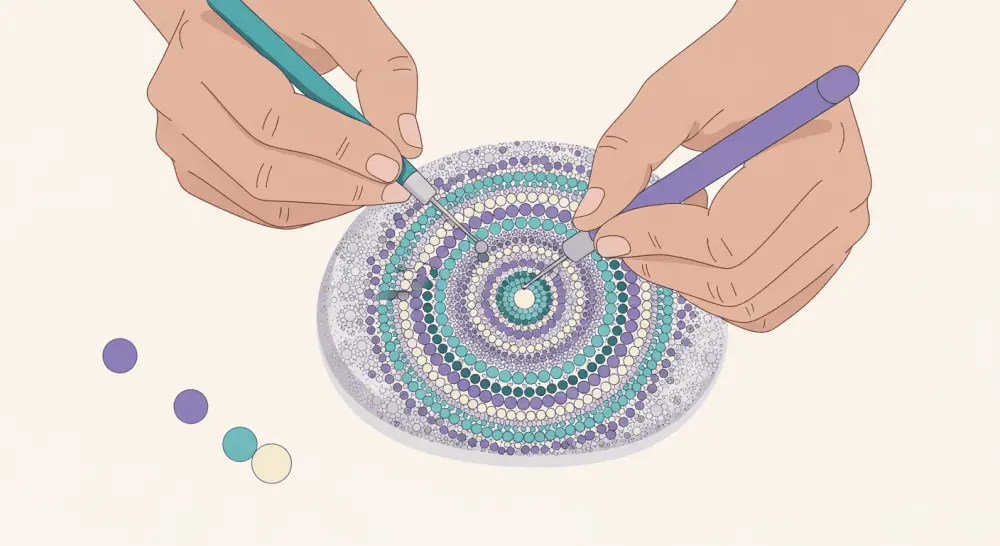
While you can use regular brushes, specialised dotting tools make a dramatic difference:
- Dotting stylus set: These come with different-sized ball tips for creating perfectly round dots.
- Toothpicks: Perfect for the tiniest dots at the edges of your mandala.
- Paintbrush handles: The rounded ends create excellent medium-sized dots.
- Bobby pins: The rounded ends make surprisingly good small dotting tools.
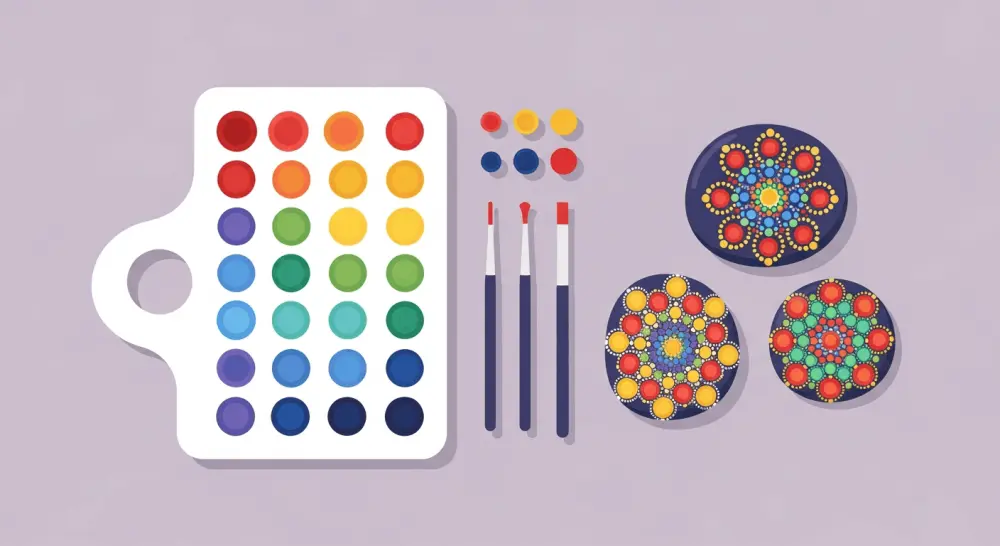
Follow our complete Mandala step-by-step template for the full process with materials list and printable instructions.
Galaxy Rock Painting: Painting the Cosmos
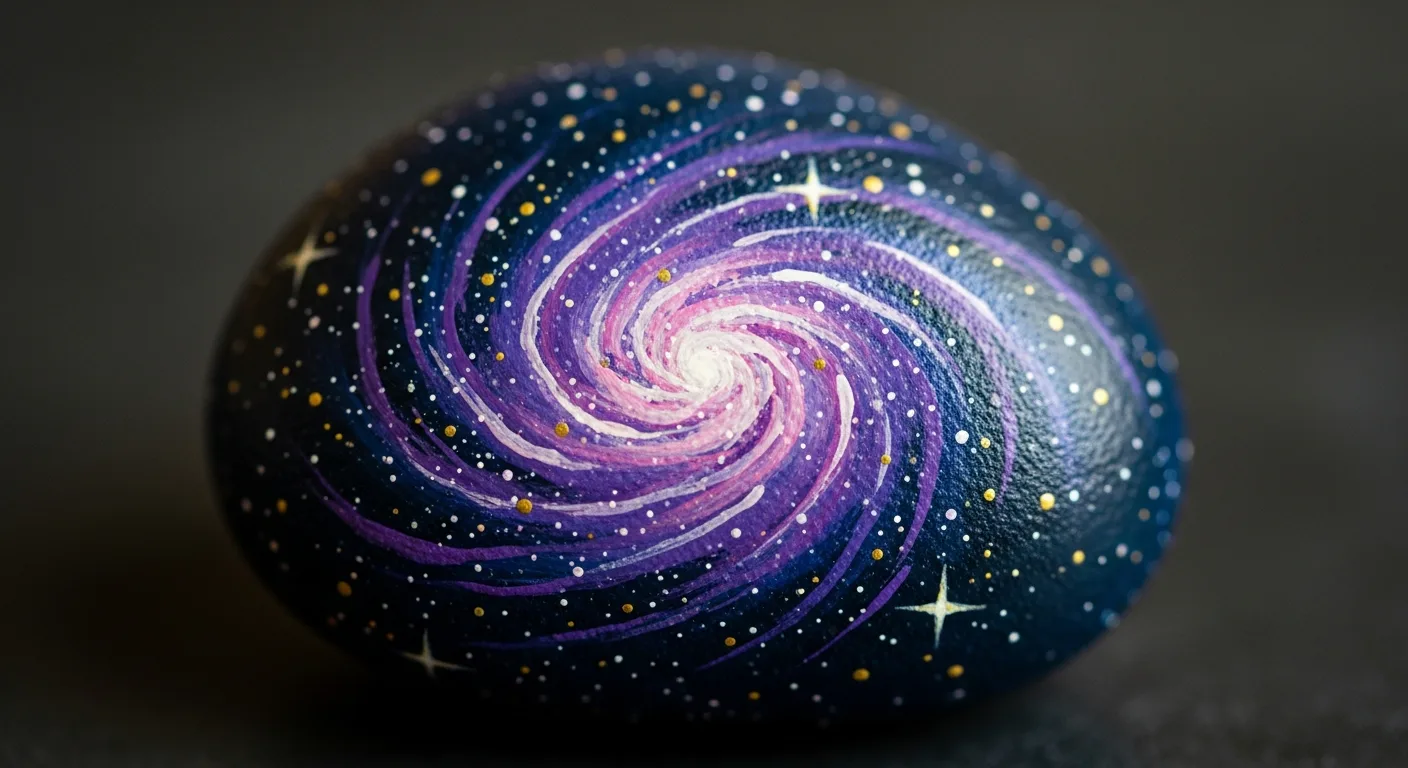
Galaxy rocks look absolutely magical - swirling nebulae, twinkling stars, and deep space colours all captured on a small stone. Our Galaxy template guides you through every step, but let us explore the techniques that bring the cosmos to life.
The Layering Technique
The secret to a convincing galaxy rock is layering. You build up colours gradually, each layer adding depth and dimension:
- Black base: Start with a solid black base coat. This represents the vast darkness of space and makes every colour that follows pop dramatically.
- Deep colours: While the black is still slightly damp, sponge on patches of dark blue and deep purple. Do not cover the entire surface - leave some black showing through.
- Mid tones: Add lighter blues, teals, and magentas in smaller patches, concentrating them where you want the brightest nebula areas.
- Highlights: Tiny dabs of white and pale blue create the brightest spots of your galaxy. Less is more here.
- Stars: This is the most fun part. Dip a toothbrush in white paint, hold it over the rock, and flick the bristles to create a spray of tiny star dots. You can also add a few larger stars with a fine brush.
Sponge Painting Tips
A small piece of cosmetic sponge or torn-up household sponge is your best friend for galaxy rocks:
- Dab lightly - pressing too hard creates solid patches instead of the soft, nebula-like effect you want.
- Use a different piece of sponge for each colour to keep them clean and distinct.
- Slightly overlap colours where they meet for natural-looking transitions.
- Let each colour layer partially dry before adding the next to prevent muddy mixing.
Advanced Galaxy Techniques
Once you have mastered the basic galaxy, try these advanced additions:
- Spiral galaxy arms: Use a fine brush to paint subtle curved lines in lighter colours, suggesting the spiral structure of a galaxy.
- Constellation patterns: Connect some of your star dots with thin white lines to create recognisable constellations.
- Glitter sealant: A sealant with fine glitter adds a realistic sparkle that catches the light beautifully.
- Planets: Add a small circle in one area and paint it as a planet - rings like Saturn or swirling colours like Jupiter.
Get the full process in our Galaxy step-by-step template with a complete materials list and tips.
Which Design Should You Try First?
Both designs are suitable for kids ages 7 and up, but they require different skills:
- Mandala is best for children who enjoy precision, patterns, and patient, methodical work. It rewards careful attention to detail.
- Galaxy is best for children who prefer freeform creativity and are comfortable with messy, experimental techniques. There is no wrong way to paint a galaxy.
Why not try both? Paint a mandala on a smooth, flat rock and a galaxy on a larger, rounded one. Together they make a beautiful pair for display or for hiding.
Share Your Masterpiece
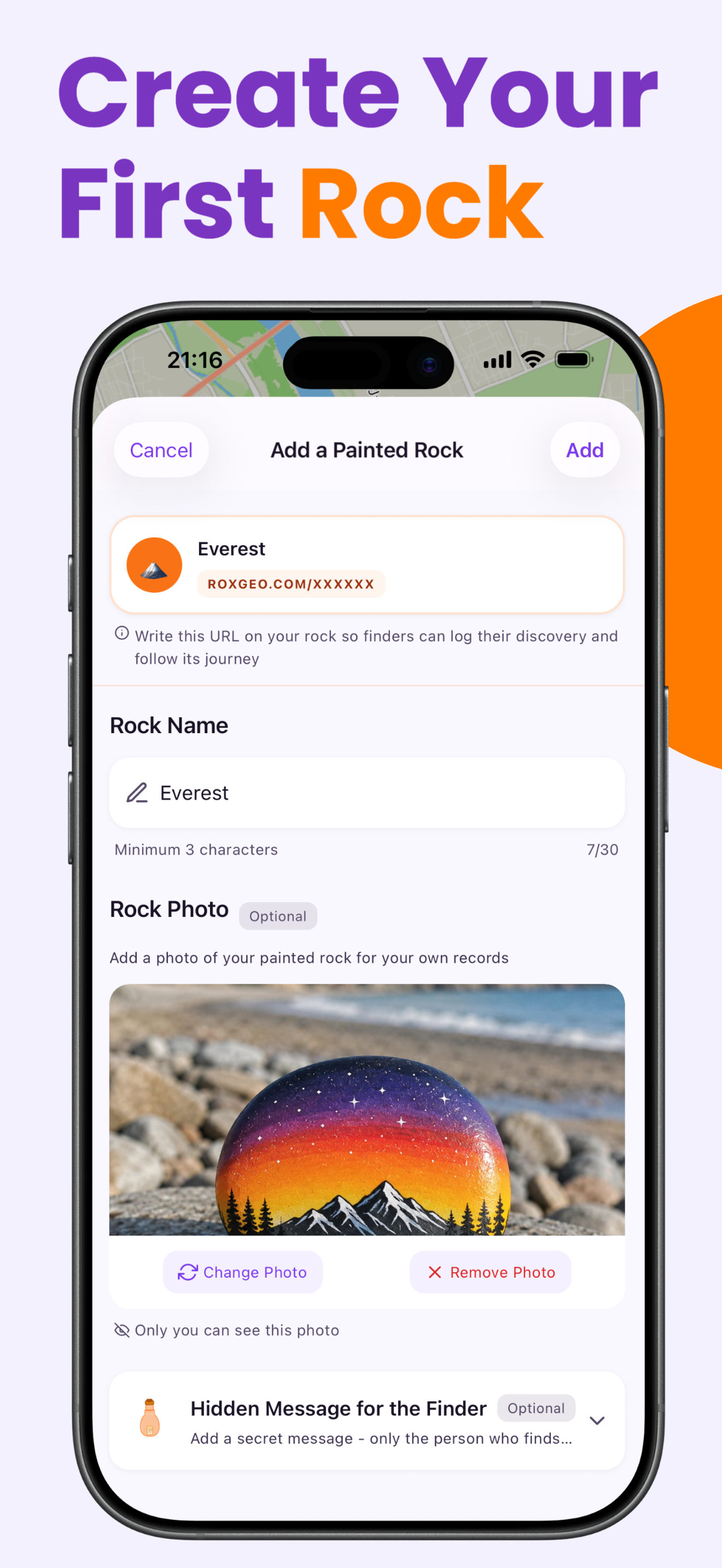
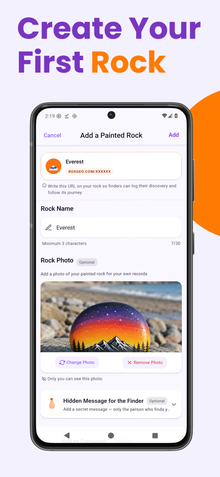
Mandala and galaxy rocks are too beautiful to keep hidden - but that is exactly what makes them such incredible finds. Register your rock on the RoxGeo app, seal it with clear sealant, and hide it somewhere special. Imagine the delight of the person who discovers a handpainted galaxy or mandala in their local park.
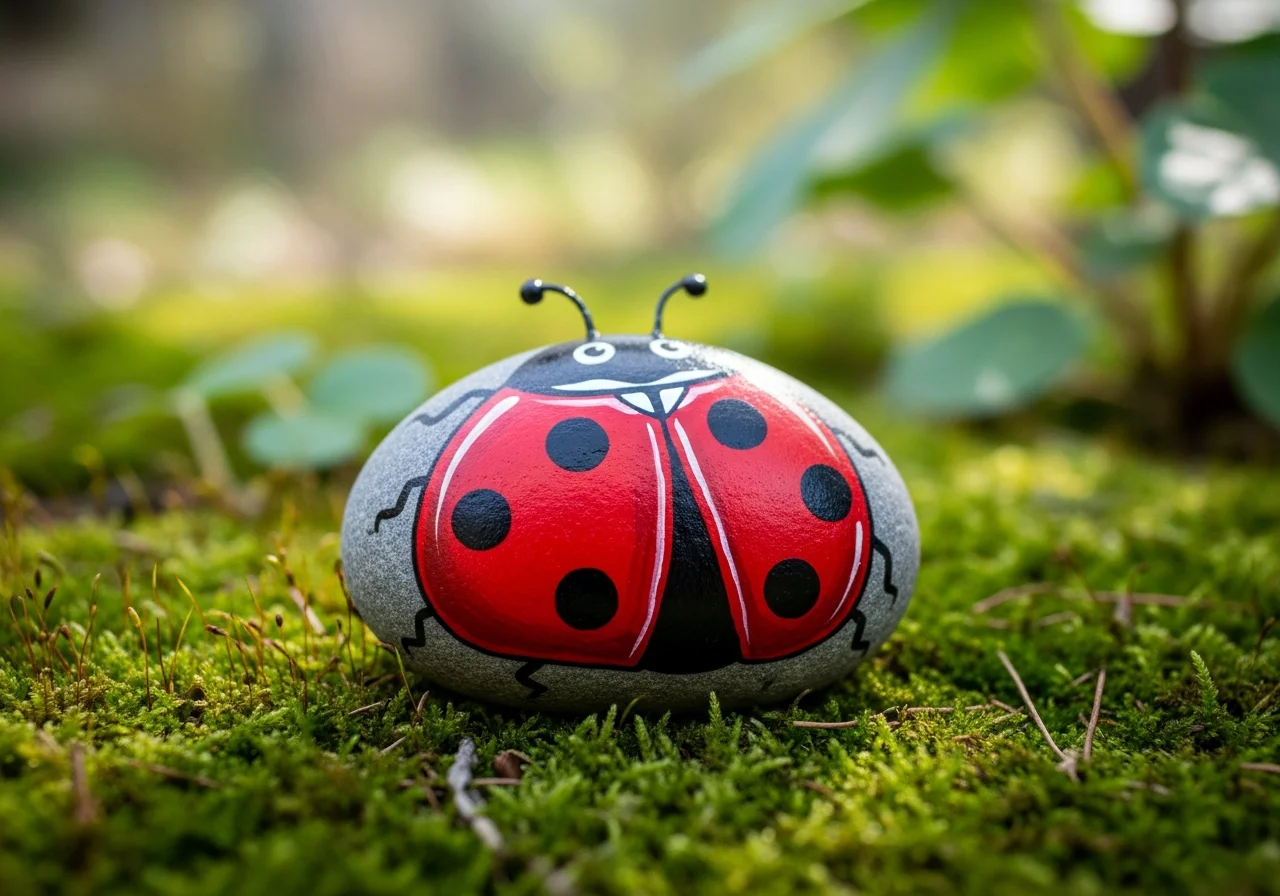
Explore all of our Rock Painting Templates for more designs, from beginner ladybugs to creative hearts with messages. There is a perfect template for every skill level and interest.